AFK Collection

Malaysia's Foremost Contemporary Artists

Comprising the country's foremost contemporary artists, the AFK Collection has been actively curated through collaboration with artists, curators and art writers with an intimate knowledge of the Malaysian art ecology.

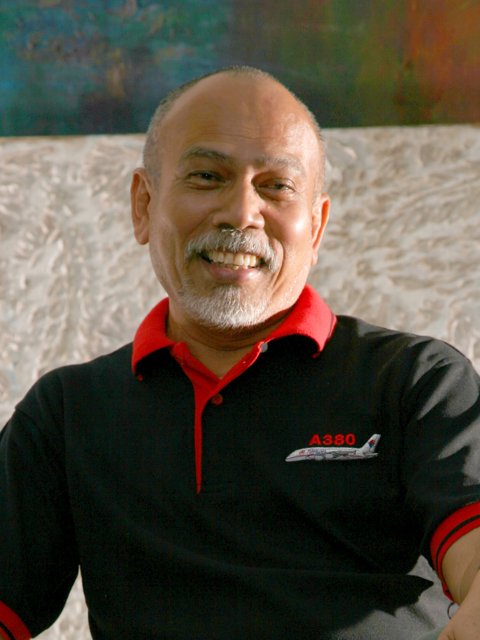
Fauzan Omar

Fauzan Omar

1951

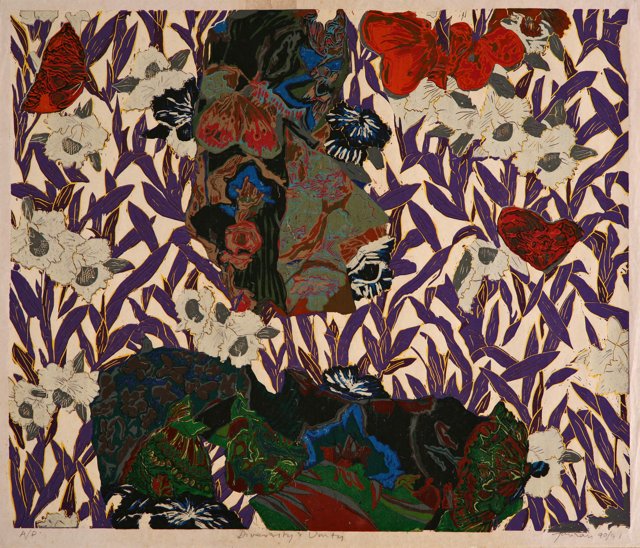
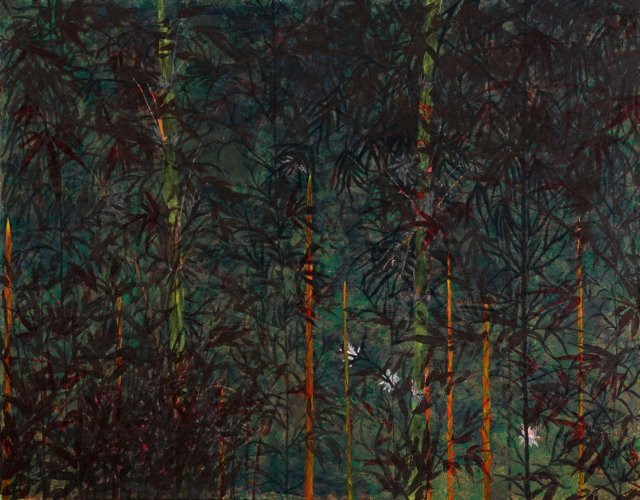
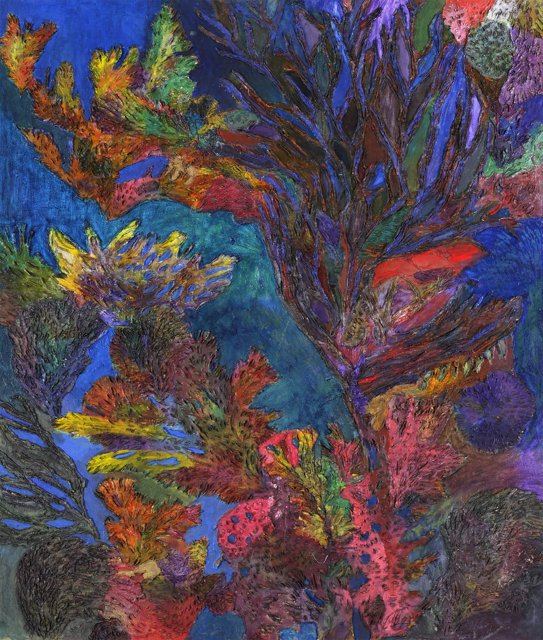
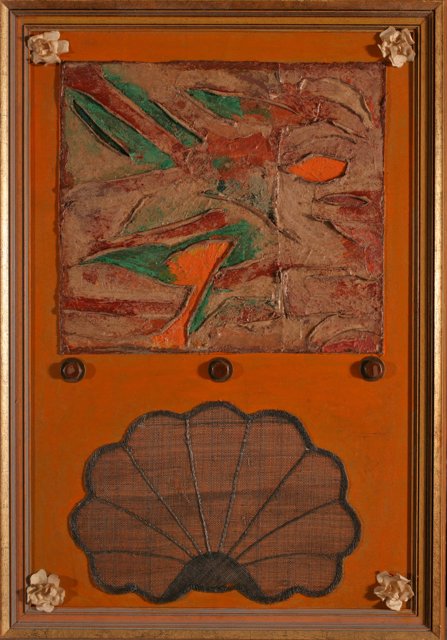
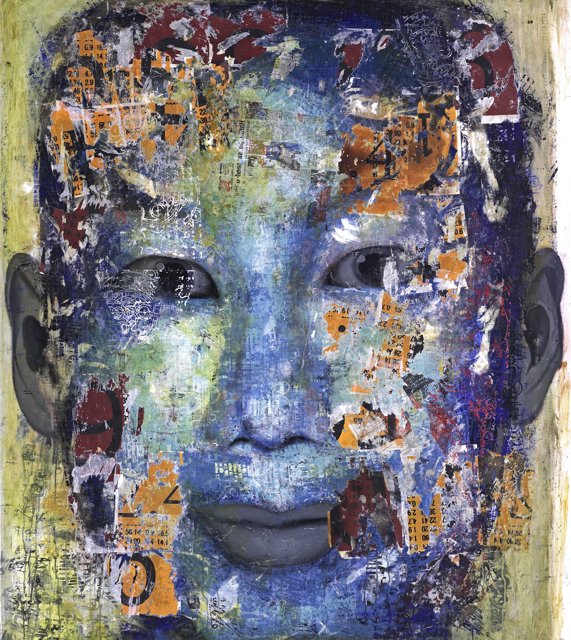
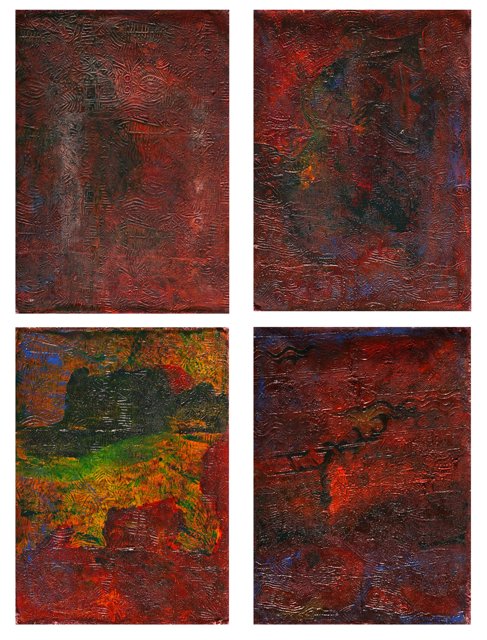
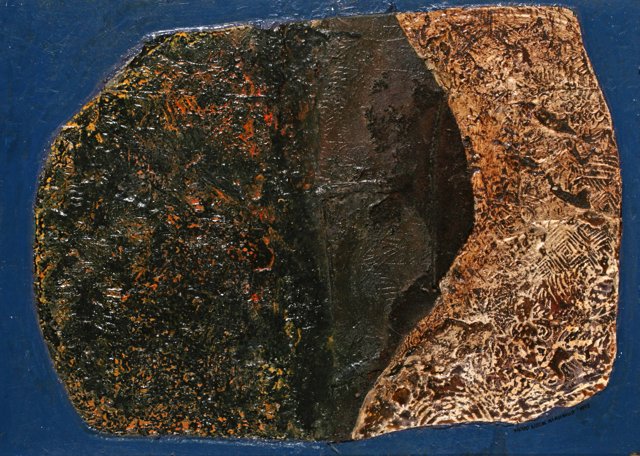
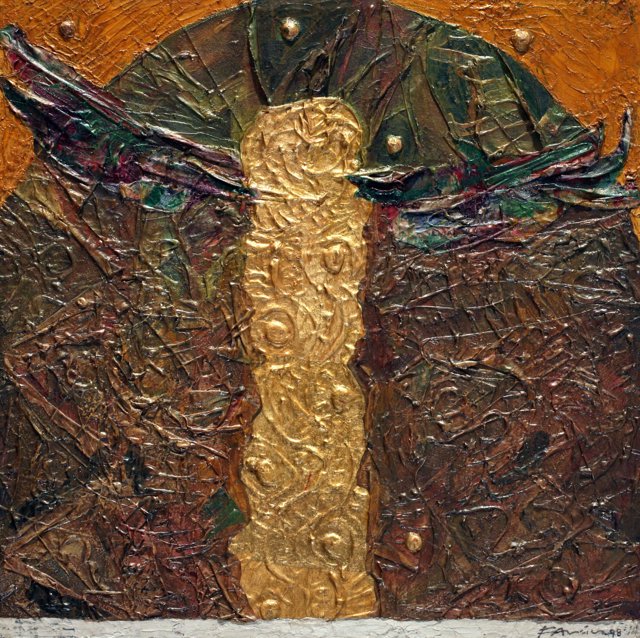
Fauzan Omar’s works, such as Luminosity 1 or 3 (1989-90) can appear kitsch. Both four-panel artworks represent attempts to reproduce real flowers with three-dimensional effect. Palette choice is limited and the motif is repeated to emphasise relief and texture. Luminosity comes from the interplay of light on the surface and a flat painting does not offer the same effects or visual impact as these tactile works. It is obvious however that the artist never intended to reach for the conventionally beautiful, or similar responses, with his works. In one essay, the word `ugly’ cropped up. The remark is not enough to form a cohesive analysis, but lifts the lid on the controversy that surrounds some of the works. As such, judging them on aesthetic value alone is pointless. These works are highly representative of the artist’s style, whose prominence derives from his explorations in materiality. The Layer series (1979) is iconic, especially Untitled (1980s) with its collage-like play of disjointed elements in layers and cutaway pieces. Later works delved into the effects on material, surface, colour and shape, influenced by Kurt Schwitters (1887-1948). There is also a deconstructive element, with the use of three-dimensional effect of sculpture and textural material, such as the likeness of tree fungus in Kulat (1990). Fauzan’s works of the 1990s can also be seen as an alternative form of revolt to the ubiquity of ‘pretty pictures’ demanded by Malaysian collectors then. It is also the flipside to the socio-political themes that artists of his generation were espousing. Others working in this manner include the artist’s own students, the 4 Persepsi group. Fauzan would later coin the telling term ‘expanded painting’ to denote this volte-face from the romanticism of painting towards a more gritty style that challenged conventions. The artist’s anthem of ‘construction, obstruction, deconstruction’ was to have a strong effect on other young artists whom he personally taught at his alma mater, notably Ahmad Shukri Mohamed (of the Matahati art collective) who served as Fauzan’s assistant during the 1990s. The Noughties have seen a huge shift in the artist’s methodology and style. His most recent works are exemplary of this evolution. Nature remains the artist’s choice subject matter, but the textural qualities of earlier works have been abandoned for flatter introspections of the many facets of nature, specifically vegetation and greenery. A work from the Rejuvenation series (2004), for instance, explores the beauty of flowering plants, whilst Bamboo Shoot (2008) sees a strong repetition of bamboo shoots and leaves, reminding viewers of the magnitude and glory of God’s creations. All these works mark a major transformation in Fauzan’s art, complying with the artist’s recent interest in sustainable development and the effects of human consumption on nature. Panorama (1991-2008), a work spanning over a decade, illustrates his artistic growth, as it represents the conjunction of two periods in the artist’s career. The white relief panels exemplify Fauzan’s earlier Layer phase, whilst the tree canopies are indicative of his painterly efforts.

31 Artworks
Artist Print 1
Bamboo Shoots
By The Cliff
Certificate Of Fitness Urban Cosmetic
Yusof Ghani

Yusof Ghani

1950

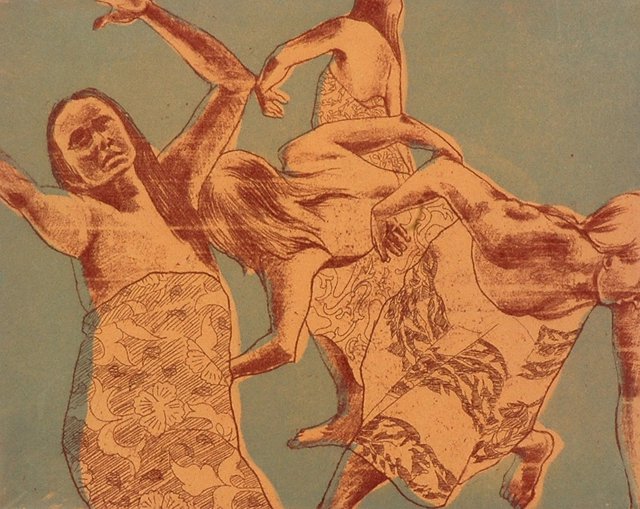
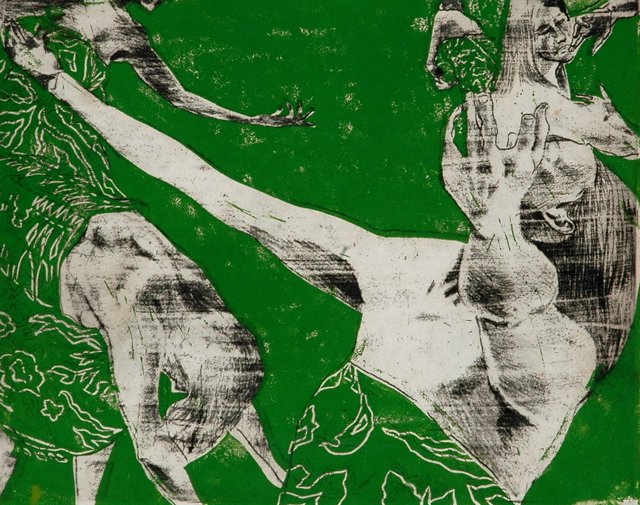
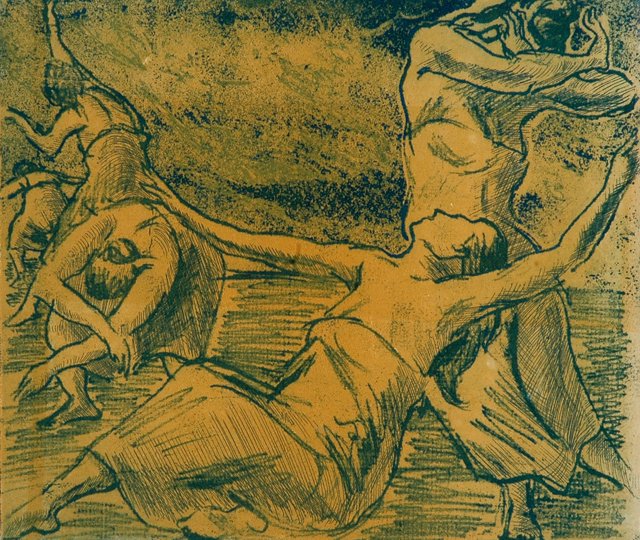
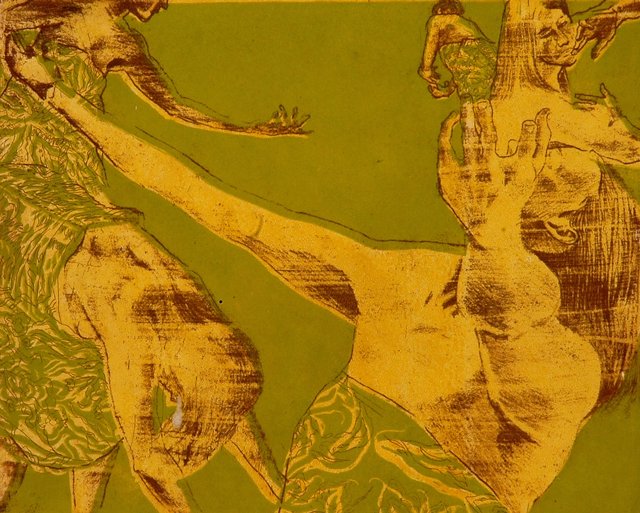
Yusof Ghani began working life as a graphic designer (1969-79) before furthering his education on a government grant to the United States of America. The undergraduate’s interest in the fine arts was awakened there, when he took painting as an elective subject. Yusof recalls being in awe of painting’s multiple evocations. Coupled with strong encouragement from his professor in painting, Walter Kravitz, the artist made the pivotal decision to shift disciplines. His seminal Tari series began while he was pursuing his postgraduate studies in Washington DC. The earliest manifestations of the subject can be seen in the artist’s watercolour study from 1981, which features rudimentary examinations of the human form. Further studies display experimentation in other mediums, such as pastels and prints, and evince the various stages of production. The artist transfers the outline of these compositions on the finished works that capture movement and vibrancy through expressive brushstrokes. Tari is the artist’s most exhaustive series. He explored the theme for a decade, from 1984. Developments between the various cycles of Tari can be seen chronologically: from thicker brushstrokes in Siri Tari III (1984) to almost sketch-like figures and larger, more ambiguous space in the fifth cycle of 1989. The choice of dance as his definitive subject matter entails a number of reasons: among them, dance can be a metaphor for the artist’s identity as a Malaysian abroad, but it is also a denominator of universal culture. Coupled with abstraction, and certainly the popularity of Abstract Expressionism, Yusof Ghani has a formula in the Tari series that could connect with almost everyone. The inclusiveness carries through as well in subsequent series that are also linked to performance: Topeng (1992-1998/9) and Wayang (1997-1999). The former was based on Kenyah and Kayan tribe ritual masks, whilst a book on the history of puppetry influenced the latter. The underlying themes are reflections on society; class imbalance is tackled in Tari, whilst the highly primitive Topeng works (that visually recall the paintings of Willem de Kooning [1904-1997]) suggest the guises worn to mask the true self. Yusof Ghani next embarked on the topic of nature. The series Hijau (beginning c.1998) consists of paintings that can be seen as abstract landscapes. These are influenced by an encounter the artist had in Sarawak; the sight of felled logs by a riverbank brought home the reality of the rape of Nature. The series do not comment directly on this matter. The works on nature’s beauty, however, remind viewers of the need to be eco-sensitive and safeguard the environment. Bukit Bendera (2001), a later work from the series, is an example and, whilst non-representational, conveys the unseen qualities of the site in Penang. Yusof Ghani’s responsiveness to social issues can be traced to his Protest series of the 1980s, when he joined a radical group of Washington-based artists that produced an exhibition in objection to American intervention in Nicaragua. The beginning of the Noughties saw Yusof Ghani return to abstract figurations. Works, such as Fishmonger (2003) or Goldminer (2003), are from the Segerak series. His palette concentrates on more reductive compositions, such as the black and white Nightwalkers II (2005) or the brown-stained Bodyguard (2006). An abundance of human figures - athletic and agilely outlined - is related to his travels. In countries such as China, India, and South Africa, the artist observed striking commonalities (greed, politics, and other venal traits) that reflect the dissolution of global barriers. Segerak, or in unison, is testament to this 21st century predicament. The cockfighting series Biring (2006-07) delivers a different charge from former works. The artist’s medium has become fluid with paint drips and the ‘semangat’ or spirit of the battle is expressed in the long, curvaceous lines.

52 Artworks
Artist Print 1
Artist Print 2
Artist Print 3
Artist Print 4
Anuar Rashid

Anuar Rashid

1958

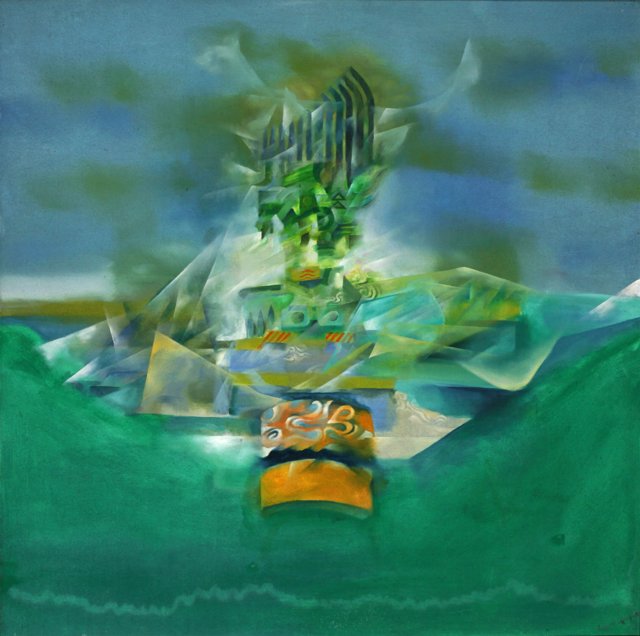
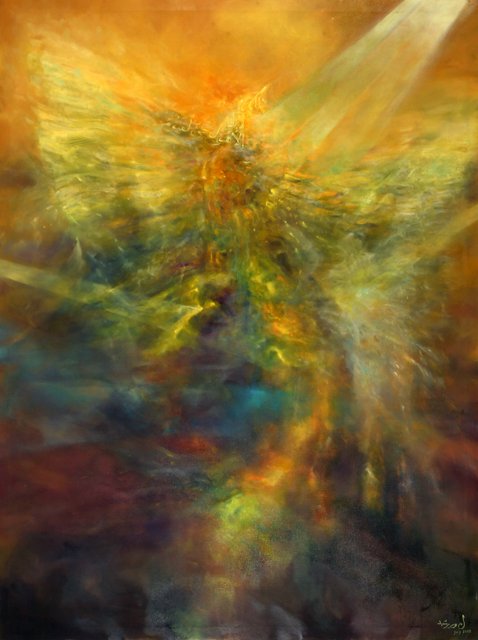
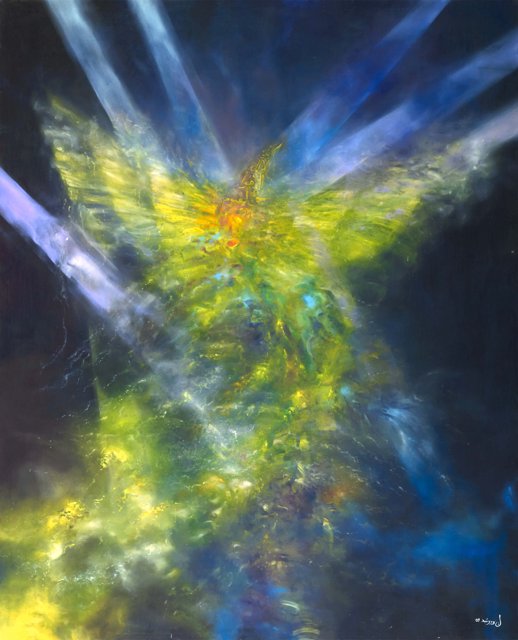
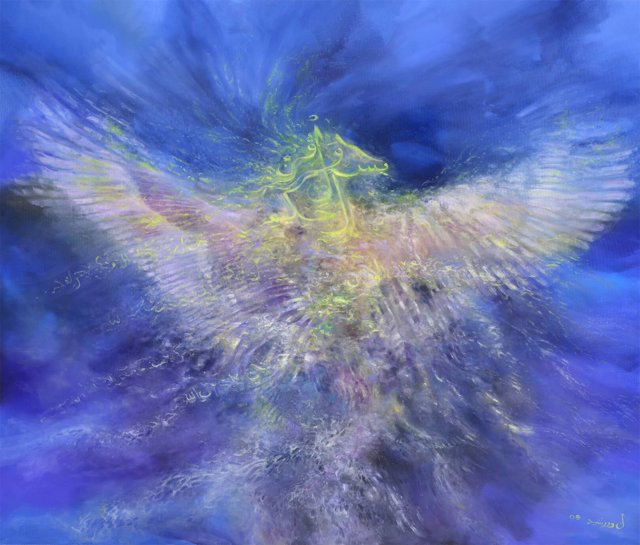
Anuar Rashid was hailed as a wunderkind of art early in his career. Inderaputra (1979), an early work from the artist’s first series, Nusantara, was painted at just 19, into the artist’s third year at UiTM. It refers to the myth of the prince, Inderaputra (a theme he revisits later in his career) and its semi-geometric forms borrow motifs from traditional designs such as keris, woodcarving, headgear, or batik. Anuar was the textbook artist rebel, diverging from the formal parameters set by his UiTM lecturers. The young Anuar - intuitive, egocentric, and goal-driven - lusted for success and the seminal Nusantara series (1977-79) was the artist’s first to be shown publicly. It consAnuarists of about forty paintings of similar merit and style (ephemeral and aqueous), was shown at various exhibitions in Penang and Singapore, and created high-profile visibility at an early stage of his career. (Nusantara, however, was the given title of this particular body of work by contemporaneous art critics; the artist actually referred to this series as kota-kota). Anuar joined Latiff Mohidin’s Anak Alam colony soon after graduating from UiTM and was the only member that had gained formal art education. The period (1979-81), in the artist’s recall, was fraught with hardship and struggle, owing to the vastly different pace and structure of the Malaysian art scene then. Led by a small number of dominant figures, it was difficult for younger artists to achieve success. He went into a 20-year hiatus after the disbandment of the colony to deal with mental illness. Anuar has since returned to artistic practice, with recent works that speak with a new clarity of voice for this epochal talent. Mihraj (Penerbangan di Langit), or Mirage (Space Flight), (2008) marks the climax of the artist’s explorations on the Inderaputera myth, with a suitably epic flourish and shift to oil paints. It depicts a golden phoenix rising, its wing span spread across the canvas, to a sun-kissed sky. The head of the mythical bird’s head is made up of words in Jawi (the Arabic script traditionally used in Malaysia) and its feathery tail guides the viewer’s eye gently to the darker wash of colour in the lower half of the painting. It can be espoused that Anuar Rashid’s works stem from his interests in myth, spirituality, and search for true national identity. Personal research has brought the artist down the route of etymology and the role of migrants in the shaping of Malaysia. There is a humanist and all-embracing approach that summarises the diverse influences in his life. While he comes from a staunchly religious background (credited to his parents), a childhood in a racially mixed environment in Alor Setar, and stints in Switzerland, Romania, France, and Yugoslavia, have had a strong impact on his personal philosophies and fed into his art.

12 Artworks
Air Angin And Api
Mihraj (Ascending - The Golden Peacock I)
Mihraj (Ascending - The Golden Peacock II)
Mihraj (Ascending - The Winged Horse I)
Zulkifli Yusoff

Zulkifli Yusoff

1962

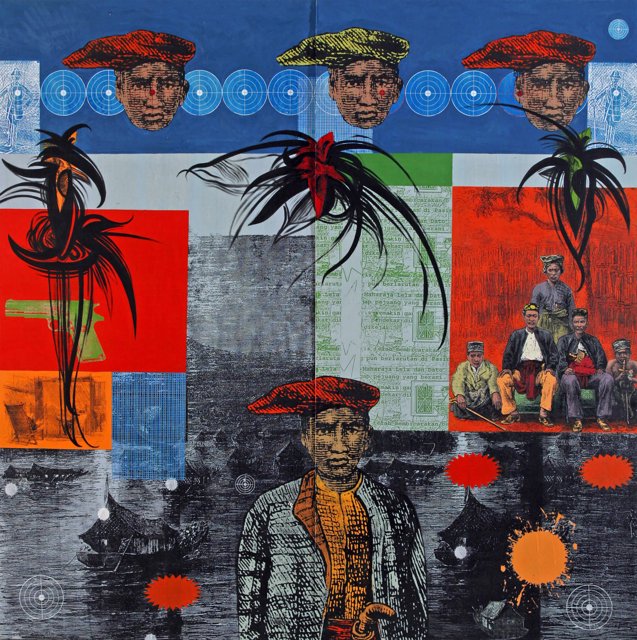
Zulkifli Yusoff has shifted between multiple mediums, from sculpture to painting, to convey his social messages. But it is through installation works, while still a student at UiTM, that he first gained prominence in the late 1980s. The art world sat up and took notice of structures which incorporated three-dimensional and spatial elements to mark contemporaneous events relating to power, corruption, and Malay identity. A work from the late 1980s in this collection, Mencari Emas, is a fine example. Chess pieces are utilized as characters fighting for control in a game gone awry. The hapless state of the players is depicted by their postures and positions; insignificant pieces have been excluded from the raised area (the pawns - recalling sheep - huddle closely together for safety), fallen pieces lay helpless, and, the king and queen face each other in the centre in a gripping state of stalemate. The lust for power is a passion that consumes the artist, as seen in Mencari Emas, where the traditional checkerboard set has been replaced by fragments from a traditional wooden kuih (Malay cake) mould. Poignantly, from above the T-shape of the set resembles a keris – the very weapon that would cause uproar in Malaysian politics and the media two decades after this artwork was conceived. The importance of Zulkifli Yusoff’s installation works has much to do with the fact that they marked a great departure from painting or sculpture, offering a conceptually based language that triggers a more participatory response from viewers. Works from the 1990s can be categorized with other artists that espoused similar socio-political themes. Zulkifli’s notable installations include Don’t Play During Maghrib (Dialogue #2) (exhibited under ‘Modernities and Memories, Recent Works From The Islamic World’ at the 47th Venice Biennale, Italy), followed with Pelayaran Munshi Abdullah (2003). The latter is based on a classic tale titled Kisah Pelayaran Abdullah (1849). Zulkifli juxtaposes its old and wordy text -detailing the author’s voyage from Singapore to Kelantan - with retro advertisements printed onto metal. Here, the images seem to consume the need for literacy; however, the contrast between past and present suggests that culture is second to the experience of the commoditised product. Don’t Play During Maghrib (a local message against playing during the close of day) can also be related to the artist’s other temporal-themed work, Subuh (2002), which is an extension of the artist’s Hari Nak Siang series. The referencing of historical texts and the collision of old and new is a preoccupation that carries through in Zulkifli’s paintings, notably the Malay Sketches series. The title comes from the artist’s primary point of reference, the 19th century colonial text by Sir Frank Swettenham, the first Resident General of the Federated Malay States. The chapters Amok, Malay Romance, and James Wheeler Woodford Birch are of special interest. This methodology allows viewers to consider text-image relationships. It is interesting to examine the artist’s interpretation and presentation of an essentially archaic subject in contemporary ways. Take Amok di Pasir Salak II (2007). History is treated with Pop flair - former Perak Resident, J.W.W. Birch, is portrayed in Warholesque hues, with bulls eye targets and the paint splotches above his head representative of attempts to take him down.The spilling of blood is simulated by streaks of paint dripping from the top of the canvas. Zulkifli’s use of recognizable symbols in his paintings is prevalent. Ketupat (rice cubes) represents the date of Birch’s murder (also indicated by the text ‘Hari Raya 2 Syawal’). Zulkifli’s art throws cautionary messages to the viewer by drawing parallels between the past and present. Raja Maimunah II (2007) refers to the ills of gambling (as indicated by the Chinese race horse calendar and ‘panggil duit’ coins); Raja Maimunah IV alludes to drug taking (represented by the opium pipes). Both works illustrate the artist’s thesis that, despite a temporal gap, many of these social woes still surface today. Stylistically, Zulkifli’s paintings have seen a marked development over his two-decade career. The artist’s methodology has evolved from an instinctive and accidental process to one that relies more on meticulous planning. Early works were more abstract, angst-ridden, and the depiction of figures was looser - a large difference to more recent works that appear more finished and manufactured, with the use of 21st century digital printing – an update to the first digital prints by Ismail Zain a couple of decades earlier

20 Artworks
Biji Getah
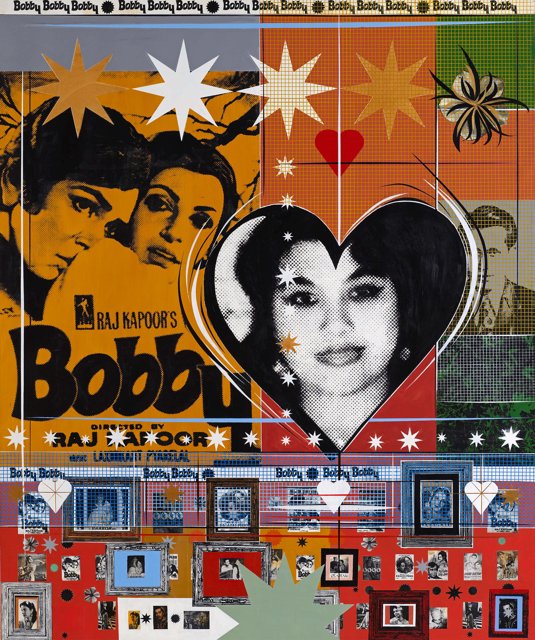
Bobby
Dato Maharajalela
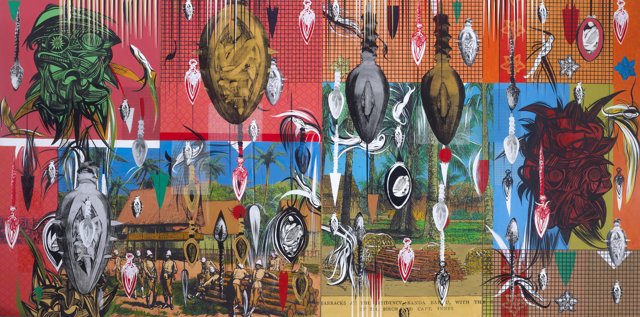
Hujan Lembing Di Pasir Salak
Eng Hwee Chu

Eng Hwee Chu

1967

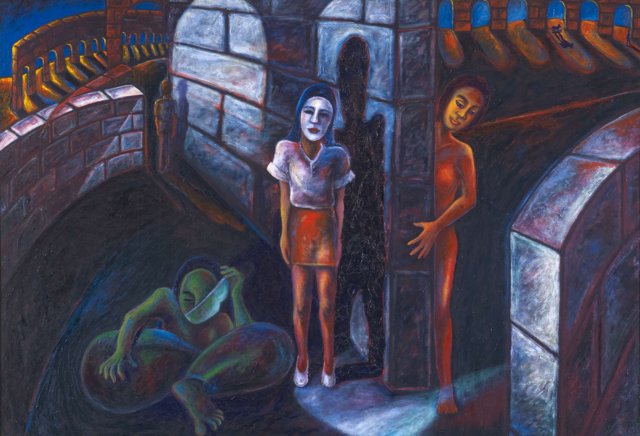
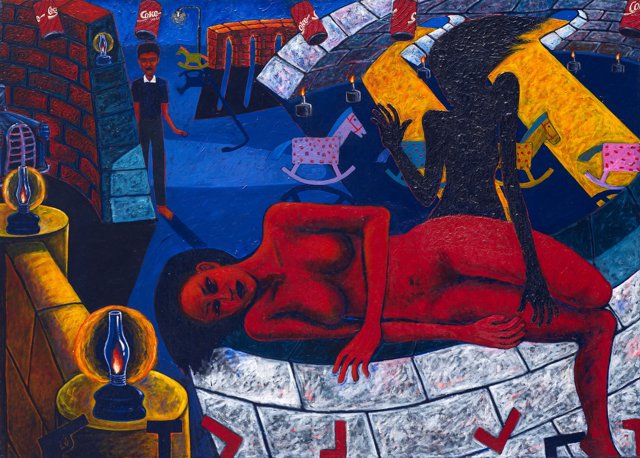
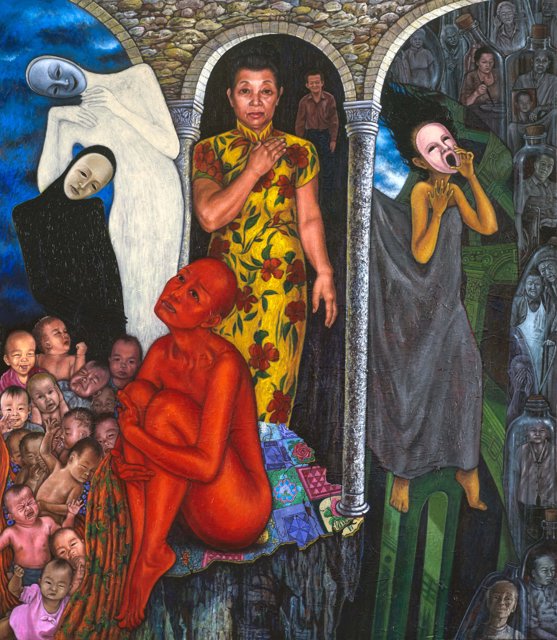
Two terms have been used to refer to the artworks of Eng Hwee Chu: magic realism and surrealism. Critics concocted the first label in tandem with Eng’s emergence as an artist to note in the 1980s and it summarizes the accuracy of her portrayals and the element of fantasticality in her paintings, seen especially in the seminal Black Moon series (1989-91). It can be divided into two separate phases that encapsulate the artist’s style. The first phase, paintings Black Moon 1 to 7 (all 1989) conjure a very melancholic atmosphere; lonesome figures are seen in bleak Chiricoespque landscapes and stoic masked creatures lend a sinister aspect to the works. The second phase (from 1991) marks obvious developments: the palette incorporates more warm hues, figures are more defined, and the number of elements increases dramatically; there are floating lotus flowers, hobbyhorses, flags, and in Black Moon 9, and even coca-cola cans, as seen at the top of Black Moon 9. The artist’s presence, as the figure in red, has also become more brazen and pronounced. The second term used to classify Eng’s works is surrealism and opinions aver that it is more apt a description than the first. The word ‘surrealism’ means the uncanny or bizarre and is associated with the art movement that touched on the dreamlike and implausible in the early 20th century. This does not mean, however, that they were not realistic. They were, especially in the case of surrealist photographic works, where the mimetic functions of the camera did not hinder, but enhanced the aspects of what surrealism meant. Eng’s works can be viewed in tandem to the black and white photographs of Brassaï (1899-1984) whose works have left an important record of Parisian society between the war years that is rarely seen. The surrealist photographer believed the truth about society could be gained from the city’s denizens of the night. Eng appears to embrace a similar belief about the illuminating power of nocturnal time. In a preface to a 1997 exhibition, she declares: “THE BLACK MOON IS THE REAL MOON: THE LIGHTED MOON IS THE GLORY OF THE SUN. I believe it is in the dark cold night that we reveal the true us. Black Moon exposes the scary faces of hypocrisy.” Eng’s paintings can be seen as inner reflections and also attempts to grasp the truth about her identity; the red figure (self-portraits, if anything) is the artist’s portrayal of the visible self, or ‘ego’ as in Freudian terms, whilst the shadowy presence is her primal ‘id’. Eng’s works have often been compared to that of Leonora Carrington (B.1917), one of the few female surrealist artists who reached a relative semblance of the fame comparable with her male counterparts. Both women employ the devices of surrealism, and, inject their female identity into the works. Eng’s paintings, in particular, are autobiographical and illustrate her collective memories: representative are My Childhood Memories [2001]), illustrating the artist’s childhood when she yearned for a hobbyhorse, or changing roles as a woman - from daughter to bachelorette, spouse, and mother. Reborn (1997) represents the artist’s later roles: Eng married installation-artist Tan Chin Kuan in 1993 and the painting features the artist with newborn baby. Surreal details include a floating embryo and a number of hobbyhorses on a curved ceiling, a boat sailing away in a sea of gold with an image of Eng’s late grandmother (seen before in Memory [1994]), a foetus, and a candelabrum. The painting also indirectly refers to the artist’s spirituality, as it is reminiscent of Christian art found on apses in churches or altarpieces. Symbolism is used extensively to enhance the narration. She uses the red figure to represent strength (as opposed to the monochromatic shadows that reveal little of her inner-self). Doves represent the Holy Ghost and, in more recent works, it is evident that Eng has matured in style, presenting more complex scenes and detailed figures. My Liberty (2000) is an example, where the artist’s hands appear bound by rope. The figure’s pose and the addition of the cherubic child recall Botticelli’s Birth of Venus (c.1485). There are also strong allusions to her ethnic roots. In Lost in Mind (2008) – the most recent work in this collection – she includes elements such as a section of a Chinese roof and figures in traditional costume, in the manner of old miniature paintings.

9 Artworks
Black Moon 5
Black Moon 9
Change of Life
Lost In Mind
Tan Chin Kuan

Tan Chin Kuan

1966

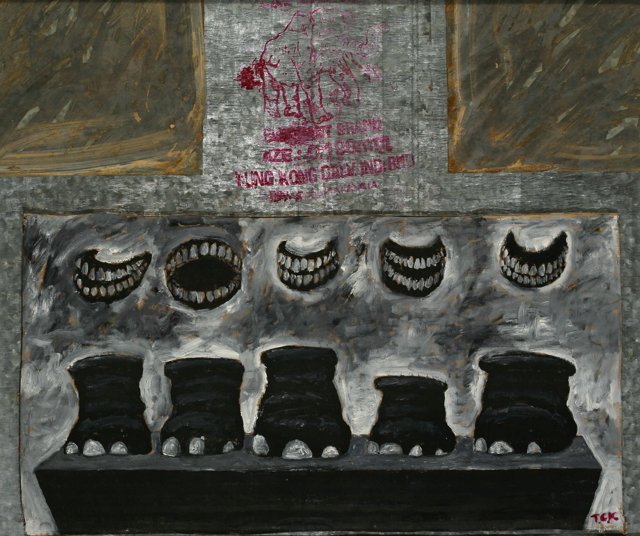
Tan Chin Kuan’s flair for art was already evident in his teenage years, with an aptitude for stark realism especially marked in a high school painting (1982). His expressive abilities were confirmed in later works - oil paintings and pastels - that paved the way to a Malaysian Institute of Art scholarship. In his graduation show from the Fine Art department, Tan’s compositions included figurative drawings and sparse paintings that capitalized on the expressive qualities of his medium (oil). The show-stealer, however, was the artist’s now-defining Blue Night (1987-90) series. The first phase – eight paintings dated 1987 – is awash in a sombre blue that delivers a distinctly melancholic atmosphere. Figures are seen alone or disconnected from each other by shadows and surreal landscapes. The works are bleak, but the strength can be found in the theme; Tan’s choice of colour and lonesome subject matter represented the artist’s inner conflict between rationality and expressiveness. Only night, he felt, could reveal man’s true character. Tan painted a picture of the angst-driven artist, adopting the same modernist mantra favoured by many young male peers – that the artist, like a solitary owl, is an entity apart from society. The young artist declared (1990): ``My painting must also possess a temperamental quality which will evoke introspection... shock the viewers’ spirit, soul and body profoundly.” He achieved the effect by appropriating aspects of metaphysical painting, and later adding three-dimensionality. Post-graduation, Tan’s Blue Night series expanded to include sculptures beyond the canvas (a white horse in Blue Night 9 – Death of the White Horse [1988]) and abstracted three-dimensional figures. Blue Night 10 Tragic 1 (1989) - now in the permanent collection of the Fukuoka Art Museum – features figures in limbo: pseudo-cubist within the colourful central composition, but elongated and wiry (like the sculptures of Alberto Giacometti (1901-66) beyond this parameter. It is precisely this break from the rules that have come to define Tan as an artist. His installations, in particular, espouse the use of space and raise the notion of theatricality. Interestingly, Tan gained fame abroad with local recognition following much later. His works – gritty and raw, complicated and frank, conceptual and three-dimensional – did not comply with local tastes of the period, but the critical messages and visual language of his artworks did resonate strongly with younger minds; Tan’s influence on budding Malaysian artists is noteworthy. Sadly, not all of Tan’s installation works have survived, owing to both spatial constraints and the lack of patronage during the 1990s. Tan has been married to Eng Hwee Chu since late 1993 and, with Umibaizurah Mahir and Ahmad Shukri Mohamed, and Yau Bee Ling and Choy Chun Wei - form the third artist couple in this collection. The relationship offers another interesting trajectory to the analysis of Tan’s work. There are obvious parallels in their styles although each has an individual approach. Eng’s Black Moon series (1989-91), for instance, could be read as the counterpart to Tan’s Blue Night series; both proffer that night reveals true human nature and a number of similar symbols and elements carry through their works, such as the lotus flower (The 26 Year Old Monk [1992]), masked figures (Tragedy of the Wooden Horse (1992)), and horses (Horse I, II, and III [1995]). And, both artists have portrayed themselves on canvas, although Tan’s depictions are less mimetic.

10 Artworks
American Dream
Boat
Eaten
Heaven
Jalaini Abu Hassan

Jalaini Abu Hassan

1963

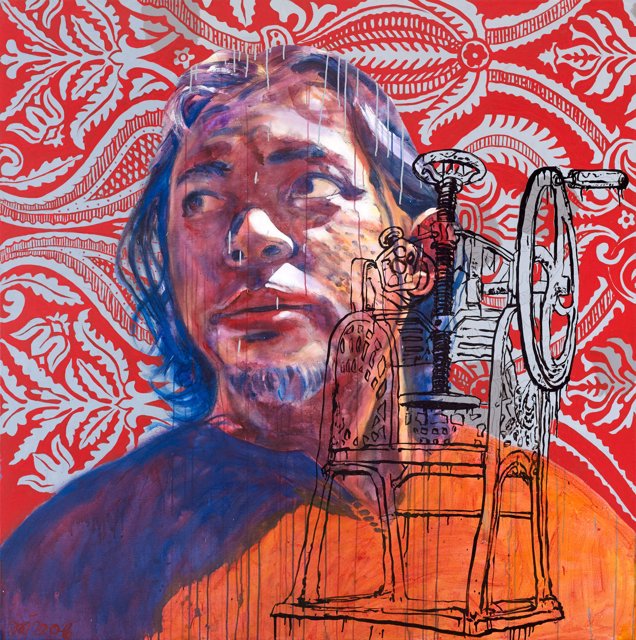
Jalaini Abu Hassan, popularly known as Jai, inherited an artistic streak from his maternal grandfather who practised traditional woodcarving. The army man’s son also cultivated his visual interest through comics and illustrated books. Images of every kind proved appealing, as he waited anxiously for his parents to return with weekly groceries so that he could study the packaging design and details. The childhood days in Taiping, Perak, have left an imprint on his work, seen in appropriation of rustic themes. Definitive works from the Noughties, such as Red Verandah, ATENG, and Kenduri (all 2001) offer viewers a nostalgic glimpse of the artist’s youth with their local elements. The theme is repeated years later with references such as the hand-operated ice-shaver in Ais Kacang [2006] or the vintage cars in other works, suggesting a yearning for the idyllic small town life. Jai’s formal art education began at UiTM, assigned to printmaking (which eventually) became his major despite his forte in drawing. The latter skill, especially, has been clearly expressed in the Mantera series (shown in 2004), where compressed charcoal and bitumen are elegantly manipulated on paper to create great contrasts and sepia-tones. These works are grouped under the header of supernatural beliefs that make up the Malay cultural world. Jai’s years after ITM proved to be tough and he personified the image of the struggling artist in both persona and reality. He stayed with the Anak Alam community (a colony that emerged during the 1960s) and works produced during this period were hasty, comic-like and lowbrow. His exit ticket came in the form of a Public Services Department (JPA) scholarship in the mid-1980s. He pursued a postgraduate degree at the prestigious Slade School of Art in London, where – following their more traditional mode of teaching – he trained vigorously in mastering figurative skills. The school was also the alma mater of one of Malaysia’s most distinguished artists, Datuk Syed Ahmad Jamal – featured in Jai’s The Painter (2006). Interestingly, Jai’s newly gained credentials did little for the artist on the local art scene, monopolized at that time by more traditional movements such as the Malaysian Watercolour Society. He made their skills his benchmark, producing several watercolours such as the simple Untitled (Two Pails) (1983), and the Artist Colony works a decade later. Further studies beckoned in the 1990s, which saw the artist further his studies at the Pratt Institute in New York. The period marked his turn towards the German tradition, studying the performances and installations of Joseph Beuys and the paintings of artists like Anselm Kiefer and Gerhard Richter. Jai, to some degree, offers Malaysian viewers a glimpse of Beuys’ influences; masculine identity is pronounced with many of his portraits being male figures. The artist is seen in side profile as Tok Bomoh [2004], there are highly realistic depictions of Malay warriors in Laksamana I (2004) and II (2005) and the artist’s love for big bikes, as documented in Working Drawing Still Bike [2005], is well-known within art circles. Jai’s vast body of works in this collection presents a good opportunity for viewers to take in a chronological overview, as well as note developments in style and form. His oeuvre consists of a great use of symbols and a powerful showing of figurative works. And, one of Jai’s most enduring hallmarks has been his use of bitumen, a material that he has influenced many fellow artists to incorporate into their materials.

70 Artworks
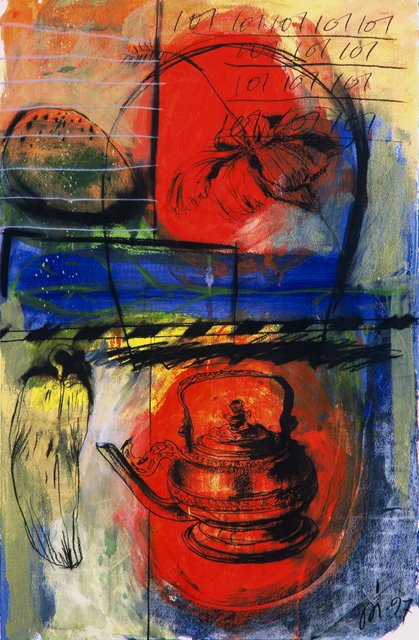
101
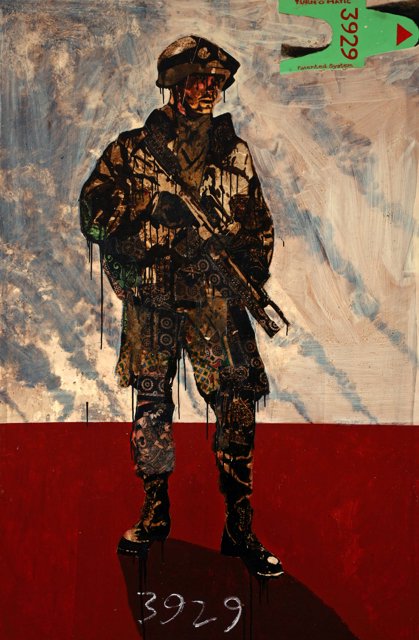
3929
Ais Kacang
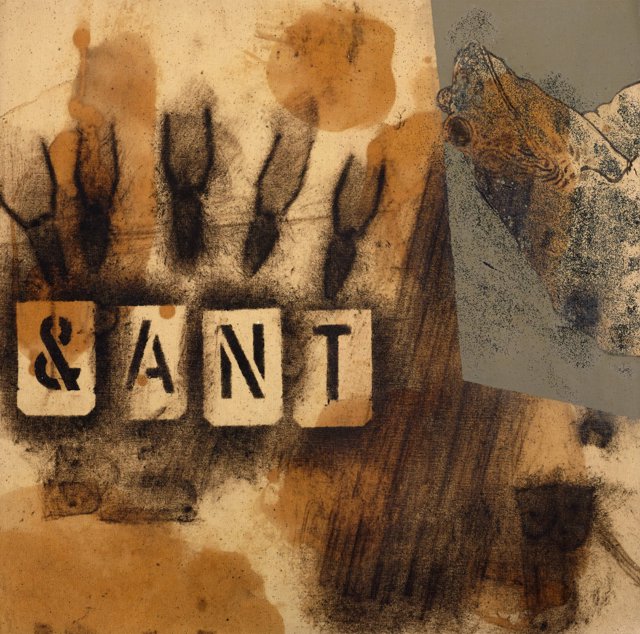
& Ant
Ahmad Zakii Anwar

Ahmad Zakii Anwar

1955

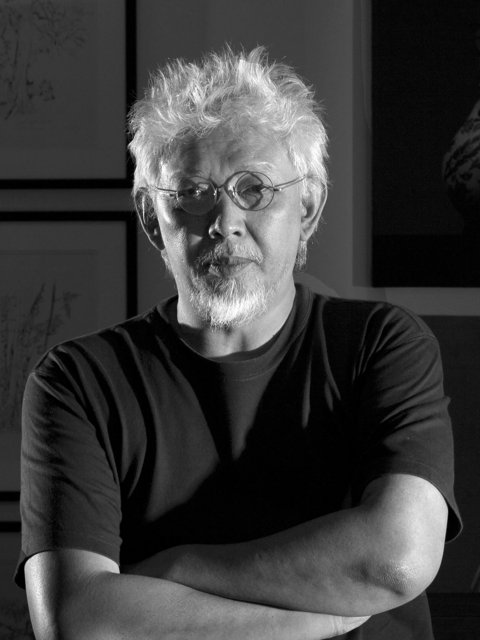
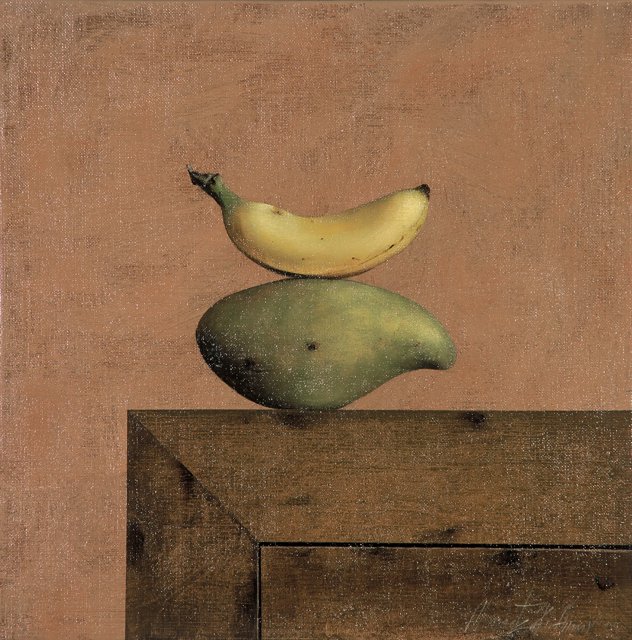
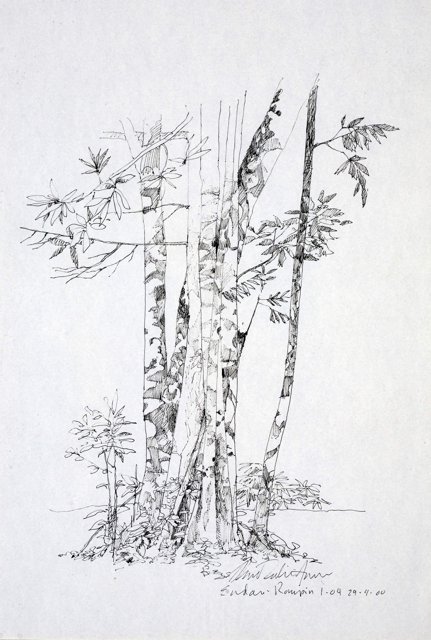
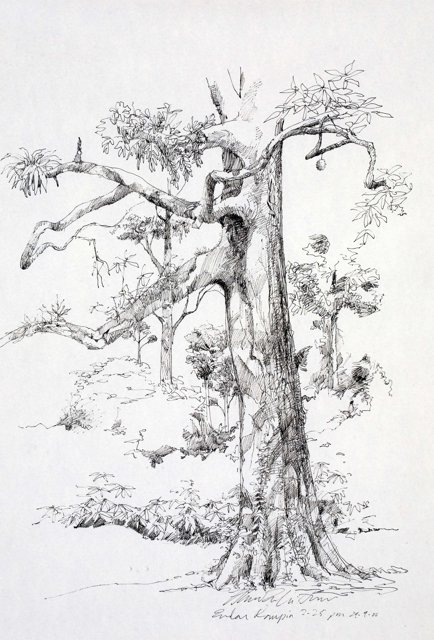
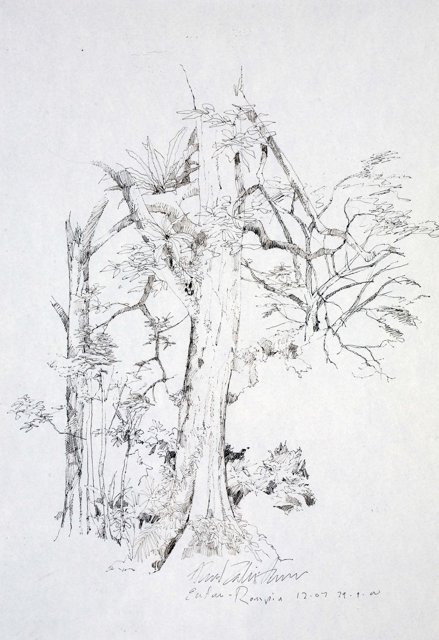
Ahmad Zakii Anwar, or Zakii, graduated from the MARA Institute of Technology (UiTM, as it was previously known) and began his career as a graphic artist in the field of advertising. His foray into the world of fine arts came relatively late (when he was thirty six). The artist’s earliest works in this series – four works of ink on paper from the Endau Rompin Series (all 2000) - can be seen as a reference to the artist’s hometown of Johore, where he presently lives and works. These preparatory works are highly intimate. They also hint at Zakii’s fine skill at mimesis and justify the term ‘realism’, which is often used in reference to his oeuvre. Other works in this collection strengthen this designation. Still Life (2000) is a good example. The early painting depicts an upturned white radish with a lime perched atop its very tip. The accuracy of the artist’s depiction is admirable; the grains of wood are highly life-like and the shadows and textures of the subjects (the fruit and vegetable) make them seem three-dimensional. This work (along with others from this series) possesses a painterly finish reminiscent of past masters and an age where such craft and skill were paramount. It also releases a coy erotic charge (consider certain parallels with the black and white photographs of peppers by Edward Weston in the 1930s) that offers a contemporary and almost parodic twist to the relatively archaic genre of still life. Indeed, as still life from centuries before were meant to deliver a certain degree of morality through the addition of certain symbols or icons, it can be argued that Zakii’s paintings of cheekily positioned fruit evoke similar tensions, but with a dollop of satire. Later works produced in this vein intensify this argument, and, examples within this collection include two oil paintings with porcelain vases as main subject matter (Untitled [2003] and Untitled [2005]). Both demonstrate the artist’s homage to a tradition that gained prominence during the 17th century in European art, specifically within the Dutch republic. Furthering Zakii’s skill of mimesis are his figurative works. Series include Bali (a body of work that focuses on dance, masks, and cultural traditions of the island), Etchings (multihued explorations of the male figure), The Smokers (noir images of solitary smokers with faces often smudged out, as if masked by a cloud of smoke), Nudes, and Charcoals. The latter series mirrors the fragility and preciousness of the porcelain objects that the artist has depicted in oil, and, this series is made up of portraits of various personas, including other artists. Once again, the artist’s aptitude for realist depictions is prevalent. The sooty black lines contrast vividly with the white paper, offering a strong clarity to each of Zakii’s subjects; every sinew, bone, and hair is depicted to emphasize physical traits. Facial expressions are pronounced and display a depth that draws viewers in deeply. Despite the move towards mechanical or digital aids and reproductions in contemporary art, Zakii’s works offer a glimpse into old traditions within the history of art, notably figurative drawings. Zakii’s first exhibitions were in the1970s. His career reached a pinnacle in 2008, with a wide survey of his artworks, exhibited under the title DISCLOSURE.

8 Artworks
Happy Birthday Farouk
I
II
III
Husin Hourmain

Husin Hourmain

1963

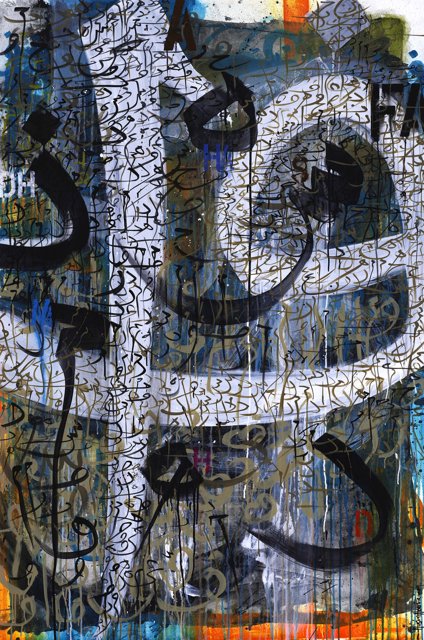
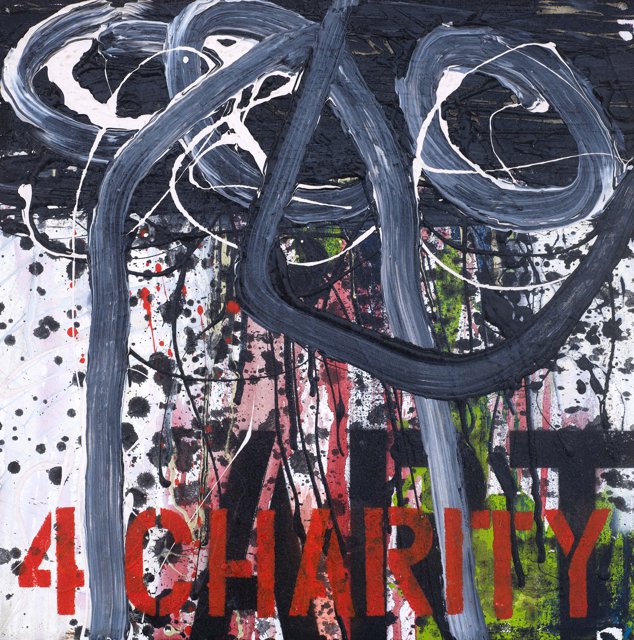
Husin Hourmain’s long route to full time painting began with studies in graphic design and photography due to parental pressure to pursue a more grounded livelihood. A lucrative career in advertising followed his graduation from the Malaysian Institute until he took up the brushes fulltime in 2003. The artist considers himself largely self-taught, but gives credit to senior artists like Yusof Ghani and Indonesian painter Widono Sudono, who taught him the fundamentals at the end of the 1970s. Jackson Pollock is cited as one of his main inspirations, an unsurprising choice considering his artworks bear a strong likeness to the American Abstract Expressionist’s own. Works from the Zero to Something Zero to Nothing series evince this fact. The body of work refers to the various stages in life, or more specifically, to how easy it is to gain something as it is to lose it. #12 (2007) in this collection displays a similar aesthetic quality to Pollock’s drip paintings. The physical energy in this work is pronounced and the artist himself attests to a preference for movement when he paints. Indeed, this physicality leads to another parallel with Pollock’s practice, famously documented by Hans Namuth’s photographs of the artist at work, frantically in motion, dancing over his canvas, and continually dripping paint. Closer analysis has led historians to believe that Pollock actually applied his paint carefully and intently. Nevertheless, Namuth’s photographs have had a lasting impact and Husin himself mimics these spontaneous and uncontrolled gestures of Pollock, using the element of chance as a metaphor for life itself; “Life cannot be controlled,” says Husin, “you can plan, but it’s not your decision how it turns out.” For his latest works, he returns to the use of images, such as calligraphy (a theme explored earlier in his career, such as the study, Allah [2006]), and the use of bitumen following some prodding from fellow artists. Indeed, this exchange amongst fellow artists is one of the chief characteristics in Husin’s practice, especially as part of the Insight collective (other members are Yusof Ghani, Suhaimi Fadzir, and Shafee Ramli). The quartet shares the common denominator of having worked in design-related fields before becoming full time artists.

22 Artworks
Abjad Dua (Antara 1 & 3)
A & Fa
Aku & 2008
Aku Dan 2008
Jeganathan Ramachandram

Jeganathan Ramachandram

1962

In the 1980s, Jeganathan Ramachandran voyaged to India to discover his roots and pursue art studies. A chance meeting with an Indian artist, Babu Surender, however, was to push him towards a very different path; Jeganathan departed from the route of formal art education and chose to live with the senior artist in Chennai (1982 -84) to study the traditional Indian art form of Tanjore Oviyam (and later portrait painting). Today, when a university degree is vital to any form of artistic pursuit, this method of study is a throwback to the master-apprentice system. These opportunities, and the demand, are being replaced by the paper chase. However, Jeganathan’s time spent as an informal apprentice and student proves that knowledge can be sought and found beyond the gilded doors of universities and art colleges, indeed, anywhere. During his stint with his first ‘master’, Jeganathan also broadened his skills with other teachers. A year and a half was spent with Sthapathi Thangavelu Achari (Principal of Thirupathi School of Temple Architecture) to master granite sculpturing, which also developed his finesse in figurative drawing. Jeganathan then dabbled in woodcarving for a year (an asthmatic condition stood in the way of further progress), music (learning the veenai), and spent hours devouring poetry and attending debates on art. Jeganathan’s multi-disciplinary approach is best seen in light of the support from his family (the artist’s father played six instruments and music was always a large part of Jeganathan’s life) and also in the context of his studies. In India, one is only considered an artist if he or she has mastered the triumvirate of poetry, music, and painting. Jeganathan returned however in the 1980s to an artistic terrain that was less vibrant and more polarised in Malaysia; he was simply labelled ‘Indian artist’ and ‘poster artist’ (a reference perhaps to the cinema posters that used to be hand painted). A full time career in art was hard to sustain in such an environment. He took up his first job again with the country’s oldest English-language newspaper, New Straits Times – a post he only left early this decade. In recent times, the artist has unfurled his full range of talent. Apart from being a visual artist, Jeganathan is also a Manaiyadi Saastram [Vaasthu] practitioner (an expert in the traditional Hindu system of design chiefly used in architecture), Nadha Brahmam analyst, columnist, author, poet, and more). Defeatist labels of earlier times have been vanquished with works like The Final Rites (1997), The House Slave (2001) and In Oneness (2007). In each work, extensive symbolism enables viewers to create their own narratives, although certain elements – the elephant that alludes to symbolism in Hinduism, the flowers, vines, and foetus that symbolize re-growth – are rooted in the artist’s own practices. Indeed, Jeganathan sees himself as a storyteller: “I take science and turn it into visual poetry”. He also adopts an observational role of people. His most recent show of works titled ‘Human Watching’ (summarising over a decade of personal study and research) is a prime indicator. It portrays various physiognomic and hidden characteristics of men and women born on different days of the week.

4 Artworks
In Oneness
The Final Rites
The House Slave
Wu Li
Rajinder Singh

Rajinder Singh

1964

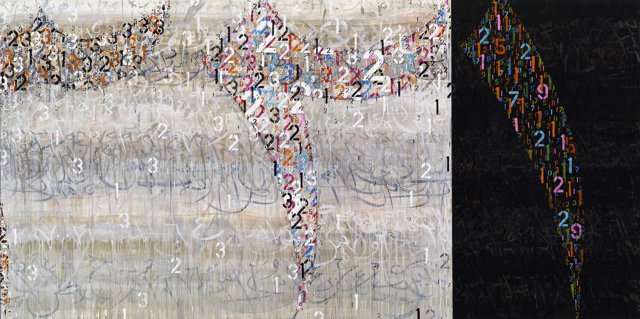
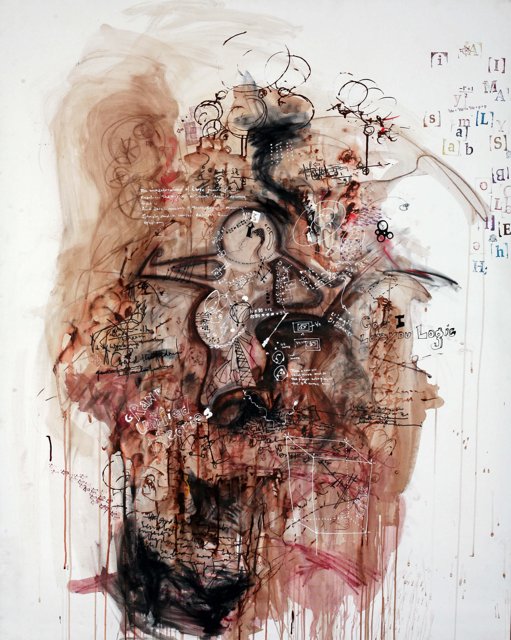
The main theme in Rajinder Singh’s artworks is the intermingling of two seemingly incompatible fields: science and art. The former – especially mathematics, as in the case of Rajinder Singh’s paintings – is identified by a systematic, well-reasoned, and logical approach, whilst the arts command more subjective and pragmatic endeavours. Rajinder inhabits the chasm between these opposing models, mirroring attempts that have gone before, notably during the quattrocento of the Renaissance period. The development of perspective, as generally attributed to Masaccio (1401-28) and his fresco at Santa Maria Novella in Florence, Italy, owes much to scientific developments of the period. Seven centuries later, Rajinder adopts this same methodology using a visual language more suited to our era. The works are from the artist’s source_code series (2006-07). The quality of each canvas is aqueous and gravitation’s effects are seen in the dripping paint. However, this luminosity or opaqueness belies the fact that the canvas actually contains umpteenth layered washes of chalk pastels and acrylic paint; the background was produced by erasing hundreds of mathematical proofs and formulas that ranged from rudimentary Pythagorean trigonometry to definitions and workings of quantum mechanics. These marks can be read as the indexical traces of the artist as mathematician. The artist says: “I did a lot of mathematics on this canvas. I enjoyed doing it… Not all of the maths washed away on every layer making for the eventual look and feel of the painting. “The final layer of the source_code paintings was executed using special fine acrylic dispensers I made to create the structures that sat upon the intricate background.” This final layer offers the narrative of each painting. Various iconographic elements are adopted, such as the flat two-dimensional landscape in the centre of New Possibilities (2006), as well as the flying aeroplanes, rockets, and parachutes. These elements signify man-made structures and are highly reflective of modern life, to which – if any dilemma should unfold – mathematics and art can provide the solutions. Rajinder’s other bodies of work include Symbiosis (2006), Faces (2007), and Number-Trance-Face (2008). The latter two – large portraits of women who have played salient roles in his life - are explorations of the same mathematics-art dichotomy that informs his entire oeuvre. The life-like qualities of the women’s faces are a contrast to their bald heads and the numerical matrix that form their faces. The inclusion of the figure demonstrates the artist’s belief that humanistic qualities cannot be ignored in favour of science and mathematics.

8 Artworks
A Plan Is A State Of Mind
A Weighted State
God's Collage
Malaysia Boleh
Shafee Ramli

Shafee Ramli

1961

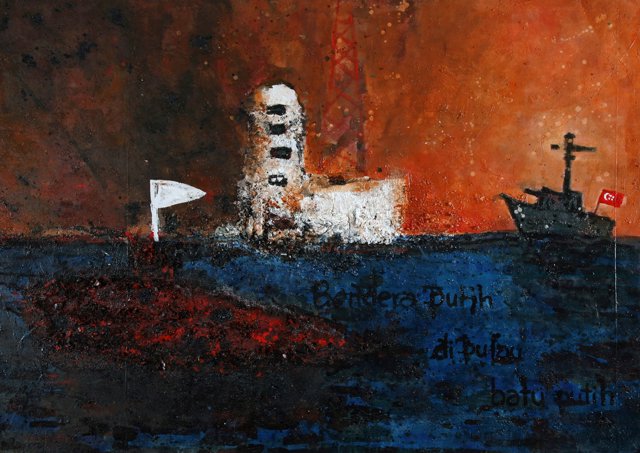
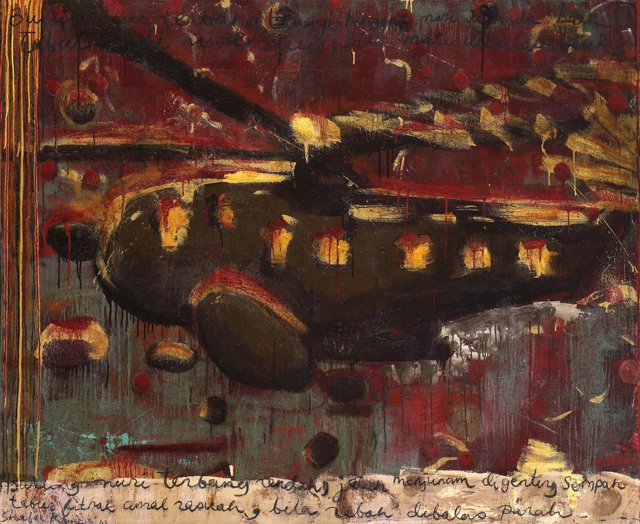
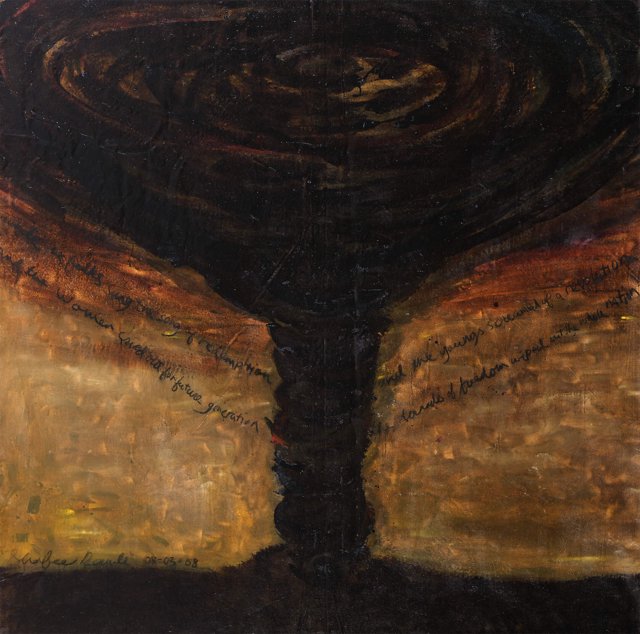
Shafee, or Chief as he is also known, took the road to the fine arts via a pitstop at creative departments of various advertising agencies in Malaysia. The undergraduate worked with various studios and galleries in the Santa Fe and Rio Grande Area in New Mexico, USA. This history is not dissimilar from other artists who have made similar shifts. In this collection, we can note that Yusof Ghani worked as a graphic designer, whilst Husin Hourmain and Suhaimi Fadzir were both in design-related fields before becoming full-time artists. Indeed, the four Malaysian artists form an unofficial art collective called Insight, after an exhibition of the same name that year. The group’s objective is to give a new perception or slant to the contemporary art scene. Shafee’s paintings, in particular, boast a raw quality that sees paint applied in highly charged ways and the addition of unconventional materials, such as fragments of charcoal. In Bendera Putih di Pulau Batu Putih (2008), for example, it has been applied to create a textural quality in the Malaysian submarine. The mixed-media work, a comment on the territorial squabble over the island (Pulau Batu Putih), questions the wisdom of government expenditure, considering its inability to hold fort against a much smaller nation. The accompanying text is an indication of Shafee’s practice of merging text and image, a methodology that sees the coming together of the visual and literary languages with poetry, in particular its use as a basis for his artworks. Indeed, the artist embellished the main images of his most recent series with his own poetry. The poems are reduced by singling out core words, leaving behind a simplified text or abstract of the original, which is then juxtaposed with the image – a practice reminiscent of Japanese haiku and haiga; in the latter, haiku poems in calligraphy are paired with a simple image. The practice is also close to the subtractive methods of advertising where the message is condensed into simple structures for easy and quick comprehension. For his postgraduate thesis at UiTM, Shafee conjured the mantra, ‘The art of war. The art of raw’. It not only refers to elements in his work (consider the fighter jet in his DO Series: Sukhoi Firing Blank Missile (2007) and the brutal tornados in Tornado (2008) and Suara Rakyat, Suara Keramat (2008), but also the raw treatment of the surface (the charcoal shards, for instance) and emphasis on strong colours to signify violence and destruction. These works mark a departure from Shafee’s previous works that included landscapes and realistic depictions, undoubtedly inspiration from an informal apprenticeship (1998-2000) with Ahmad Nazri Abdullah, an artist for the Selangor royal family, and with Shukur Yahaya (1996-1997). The artist’s other inspirations include writings by the Sufi poet, Rumi, Latif Mohidin, and Omar Khayam; artworks by Marcel Duchamp, Mark Rothko, and Pablo Picasso; the sculptural works of David Nash, Damien Hirst, and Anthony Caro; and, the sounds of Nusrat Ali Khan, Cat Stevens, and the natural sound effects of deep tropical jungles.

6 Artworks
Bendera Putih Di Pulau Batu Putih
Compressed Hyperspace
Nuri Just About To Crash
Redemption Song
Suhaimi Fadzir

Suhaimi Fadzir

1963

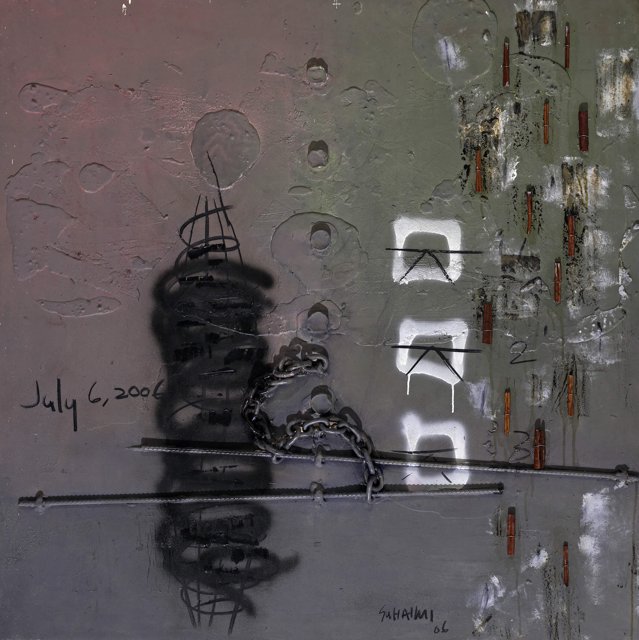
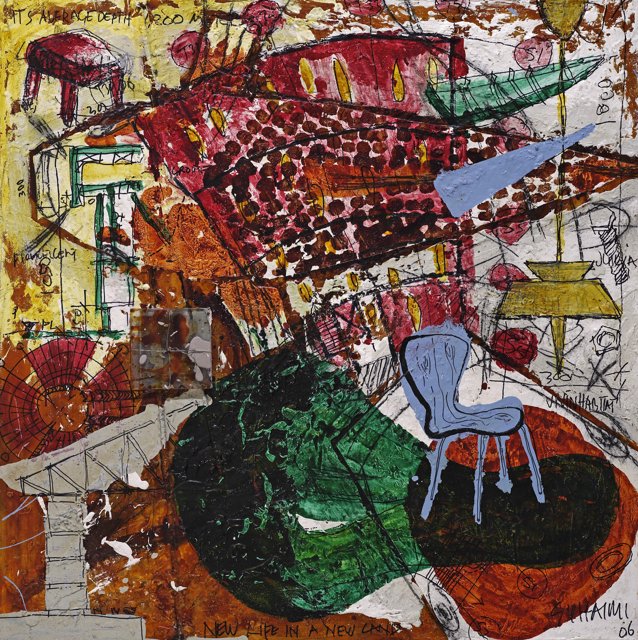
Even as an architectural student, Suhaimi Fadzir displayed a strong inclination towards designs and construction that veered towards the fantastical. Funny architecture, he calls it – a quirk that presciently laid the foundations for his artistic practice. Practising fine art alongside his formal university education paved the way towards a full-time career in art in 2004. Suhaimi first produced conventional landscapes and portraits. In 1984 he moved towards design-based mixed media works that toyed with materialism and disregard for the surface. In 1991, actual objects were added onto the picture plane. By the mid-90s, Suhaimi employed the techniques of assemblage (three-dimensionality and found objects), setting a precedent for works to follow and the style that would define his oeuvre. There are two categories to Suhaimi’s works: two-dimensional (drawings and paintings) and three-dimensional works that amalgamate the artist’s interests in materials as well as his training in the language and formalism of architecture. The hybrid term “archipainting” has been used in reference to his works – a fitting handle, considering even some of Suhaimi’s paintings embrace the tactile, material and building qualities of their three-dimensional cousins. Take Nishiki Heisi di Kuala Lumpur (2008), for example. Metal rods are present in the upper part of the painting. Images and elements (drawings, paint, and text) intersect and overlap in an incoherent arrangement. Sabar Penghilang Penat, Tekun Membawa Berkat (2008) typifies Suhaimi’s three-dimensional works, which can safely be defined as assemblages. The large work features metal rods and wire mesh that are welded, knotted, and strung from the canvas in gravity-defying positions; a white wash obscures the original appearance of these objects and is accompanied by text in Jawi (the Arabic script traditionally used in Malaysia) and scribbles on the right. A strip and splatter of black paint lends to an overall unfinished quality – raw and grimy, like the construction sites that the artist frequents to collect material. Other objects that have made their way into Suhaimi’s art are bottles, woks, paper, and wheelbarrows. Themes of his works include proverbs, family structures and old sayings. The aforementioned work is an example and joins others, such as Air Dicincang Tak Akan Putus. The artist chooses these traditional Malay sayings as a reference to his origins, despite the international flavour of his works and the language borrowed from artists, such as Arman’s (1928-2005) Accumulations and Poubelles, or more distantly, Jean Tingluey’s (1925-1991) sculptural machines. In Setengah Hari di Bendang (2008), this is taken one step further with the inclusion of batik. Indeed, East-West dichotomies are frequently mentioned in relation to Suhaimi’s art, as the artist maintains studios in both the USA and Malaysia. Suhaimi carries the cross-cultural differences into his works, as well as emotional preoccupations; there is an uplifting spirit in his art, and a more vibrant palette, when he is with his family in the USA. A more sombre tone defines works produced when they are apart. The artist’s most recent creation - conceptualized abroad, of course – embrace a colourful aesthetic and subject matter of youth and childhood memories. Robots and toys hang from the canvas, bright colours flood the surface, and the overall aesthetic bears the makings of every little boy’s dreams. The toys are not found objects. This alludes to the consumerism that engulfs youth today and the dependence of children on material consumption to see them through each day.

19 Artworks
5
6
Air Dicincang Tak Akan Putus
Asagi Di Kuala Lumpur
Mohd Noor Mahmud

Mohd Noor Mahmud

2019

Mohd Noor’s practice is ultimately tied to craftsmanship and reflective of Kelantan (a state on the east coast of Malaysia) and the colourful hum of local industries. These origins - coupled with a yearning for tranquillity and immaterial pursuits - have spurred the artist to return to his roots for both his art and personal life. The artist’s earliest series is Siri Imajan (1988), which is both a social and personal lament on the worldwide denim craze that hit Malaysian shores at that time. The work comments on the artist’s unease at the diminution of local culture against global trends, and the struggle of student life: Mohd Noor owned only two pairs of jeans (of which one was used as a mould for his artworks, washed, and worn again) and money was scarce - so scarce that his next series, Siri Imajan, saw many earlier pieces reworked or covered over. In the 1990s, the artist transformed his caving passion - Gua Cha in Ulu Kelantan, especially - into Siri Gua (Cave Series). The raw, gritty quality of the artworks embodied the natural textures of rock formations, in a mix of media based mainly on sawdust and glue. In Corak (1996), up to 10 layers in each work created relief shapes and the impression of old cave paintings. The series Kala Kota Bharu, or colours of Kota Bharu, brings the focus back to the pastoral with its exploration of batik’s myriad possibilities. The motifs in Kain Lepah (2006), for example, are based on contemporary batik. These works feature a combination of mono-print and collage techniques and also indicate a major shift from his early choice of working on fabric to producing works on wood, thereby bringing him even closer to traditions like woodcarving. The artist’s most recent body of works, Dikir Rambutan Rendang (named after his village in Kelantan) extends this trend in even larger formats.

25 Artworks
93
93 (II)
Aliya
AllahuSamad
Hasnul Jamal Saidon

Hasnul Jamal Saidon

1965

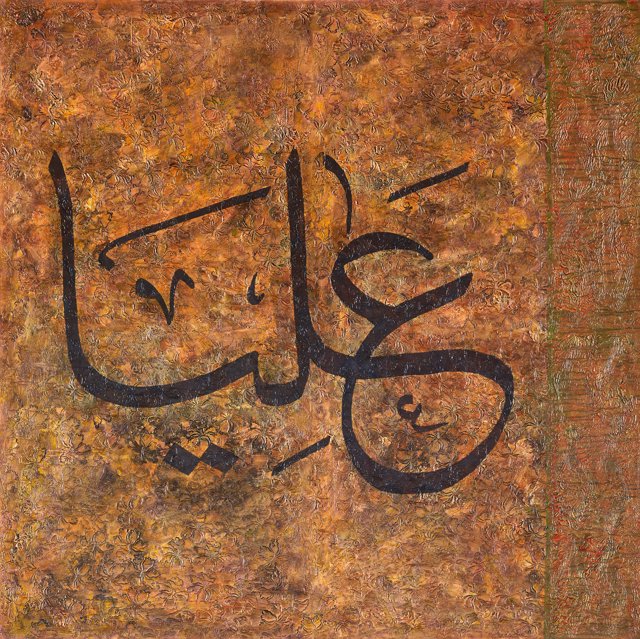
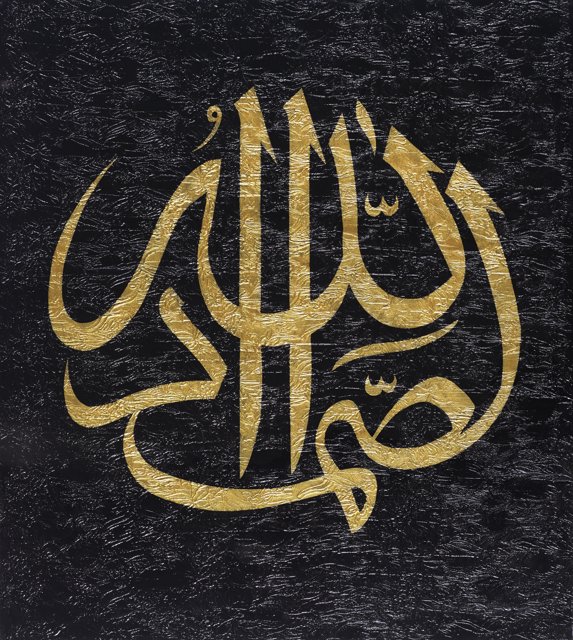
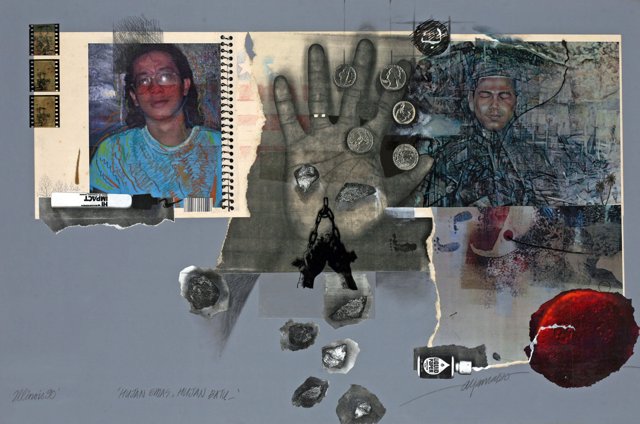
Hasnul Jamal Saidon belongs to a generation of artists who benefited from the diversity of talented tutors at UiTM in the 1980s. He learnt from dedicated teachers such as Joseph Tan and Ruzaika Omar Basaree (foundation year); Fauzan Omar and Chong Kam Kaw (painting); Ponirin Amin and Awang Damit (printmaking); Zakaria Awang and Ariffin Ismail (sculpture); and Ismail Zain and Amron Omar (drawing). It honed a solid set of skills, with draughtsmanship - particularly realist depictions - as his forte. He gained the ‘Best Student’ prize from both the Fine Art and Art and Design departments upon graduation. Further education was to present itself, after the founding a short-lived collective 4Persepsi (4Perceptions) with a group of fellow students. In the United States, the influences of postmodernism and critical texts on media (especially that of Marshall McLuhan) honed the artist’s theoretical practices, initiating a passion for in-depth explorations and deconstruction. His mature practice, for example, has covered ground on cross-cultural paradoxes, the media, information technology, and their impact on our cultural identities. Nascent elements of these topics were already present in early works abroad. Hujan Emas, Hujan Batu (1990) summarises the artist’s keenness for emerging mediums and technology. Highly experimental and naively confident, the work juxtaposes innovative and traditional elements: coloured Xerox images and the compressed foam board share company with coins and stones under the gaze of the artist’s self-portraiture (in Western garb and a fictional image in traditional Malay costume). The composition relates that the artist remains loyal to his roots, despite the opportunities that accompanied exposure abroad. Nevertheless, the experience inspired a wider embrace of technology as his practice crossed over into electronic arts. His seminal video installations such as Kdek!Kdek!Ong! (1994), not only tackle viewer-spatial relationships and the flux of old and new (the contrast between the animated frog and the tempurung [coconut shells] and batik), but also confront socio-political concerns. Hasnul capitalized on the wider possibilities of technology in the 1990s. It led the artist-academician to join forces with Fauzan Omar and Niranjan Rajah and create the groundbreaking Intergrated Art programme at UniMAS, Sarawak. After a 10-year absence, the Noughties saw Hasnul return to painting with his Hijab Nurbaya (Veil of Nurbaya) series that raises questions on female representation and identity. This body of work stems from the artist’s global art experience and re-examination of the patriarchal tendencies in Malaysian art, especially its central pillar, Abstract Expressionism. In Penjaga 3 (2002-03), the artist toys with binary opposites. The exclusion of the subject’s face negates the opportunity to objectify, or even gaze at, the woman. Korporat (2006), on the other hand, challenges the myth of the traditional Malay woman. Hasnul appropriates Hoessein Enas’ Minah (1958) and updates her for the new millennium in corporate gear. It is a commentary on the roles of the quintessential gadis Melayu (Malay girl) and the emancipation she seeks from traditional strictures. Its potency is doubled with the postmodernist flavour of reproduction; Hasnul’s work is a digital re-creation of his drawing of the original by Hoessein Enas, thereby lowering the aura of the original and inadvertently heightening his own. The work’s theme is by no means derogatory, but – like the shift from old artistic mediums to new ones – indicates that change is inevitable.

9 Artworks
Bayangan Dari Jendela Tanjung
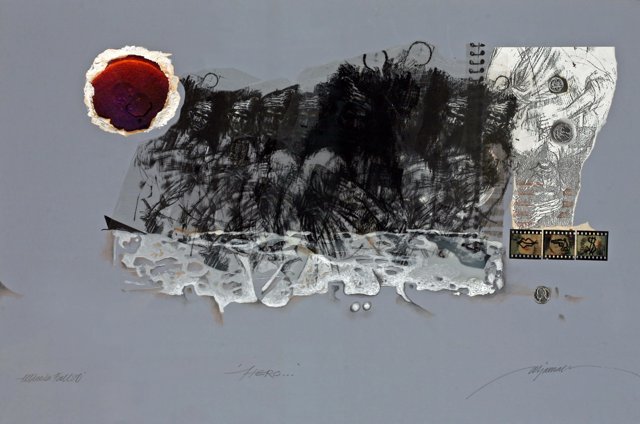
Hero
Hijab Nurbaya Series
Hujan Emas, Hujan Batu
Fauzin Mustafa

Fauzin Mustafa

1966

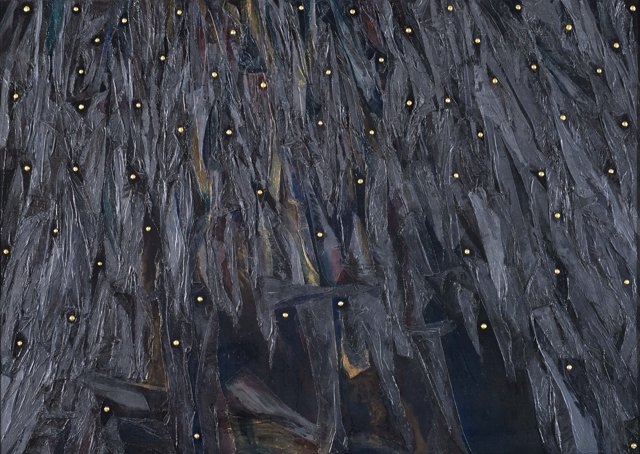
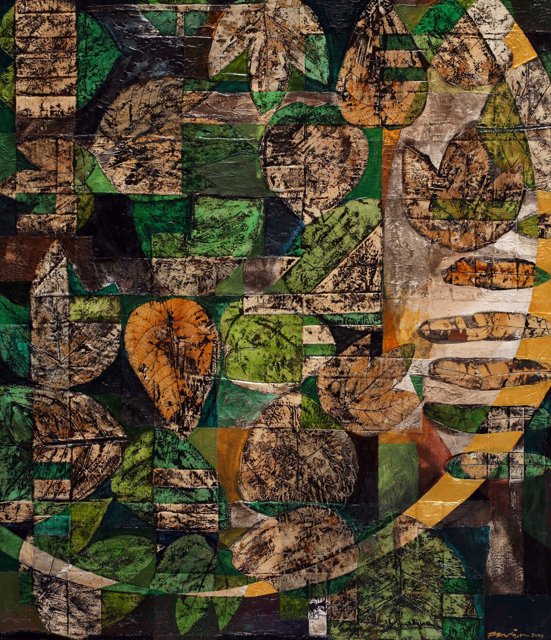
Fauzin Mustaffa defined his artistic repertoire early, beginning with the ‘mixed media’ theme of the Young Contemporaries Competition in 1987. That same year, with a group of likeminded individuals (Hasnul J Saidon, Mohd Noor Mahmud, and Taufik Abdullah), Fauzin exhibited mixed media works under the joint title 4 Persepsi. The group’s goals were simple: to challenge the conventional rules regarding painting (and art of the time). The exhibition came as a result of the group’s efforts – producing set designs - for the Centrestage Theatre group (years later, another young group of artists, Matahati, would follow this same path). Fauzin’s works in the exhibition were inspired by the incident at Lubuh Mandi, Terengganu, where villagers mistakenly uncovered corpses whilst digging greedily for gold. Fauzin’s choice highlights the importance of moderation and remains an underlying theme of his career. Individually, Fauzin’s art can be analyzed in terms of the postmodernist vehicle of deconstruction. In his works, the flat surface of the canvas is disregarded. Various elements are added via assemblage or layering and there is a distinct sculptural facet. Lost Horizon – Struggling Sea (1993), for example, features an ingenious range of materials that includes paper mâche, plaster, canvas and tissue paper that represent the quotidian. White Painting in Black Frame (1994) offers an alternative reading; apart from the obvious reworking of the surface (an all-encompassing relief of squiggly lines and small gold dots), the limits of the traditional frame are flouted with the lopsided placement of the stretched canvas. This award-winning work is followed by other frame-defying pieces, such as The Lost Horizon I and II (both 1991), which feature elements breaking away from the four corners and rectangular boundaries to denote the fury of nature gone awry. It can ultimately be argued that mixed media works bear more resemblance to our local culture than the paintbrush and canvas; Fauzin’s works employ the physical manoeuvres of craftsmanship - for example, woodcarving - and the look of his works is reminiscent of the prints and patterns of local batik. Later works, such as Spirit of Earth: Deep Forest (2001) and Mimpi Serakah di Bukir Cerakah (2005) are good examples. The gold dots – a distinct flourish that functions as a signature of sorts – are also emblematic of local culture; the artist uses them as signifiers for traditional Malay culture (they resemble embroidery or “tekad”) and to denote the various traits linked to Eastern culture, for instance, respect for nature. It is the topic of nature that can safely be used to survey Fauzin’s works, as it is - and remains - a central theme. In the artist’s earliest, actual leaves were used on the canvas (natural decomposition is allowed to occur, as it reminds viewers of temporality, impermanence, or “fana”). For his first solo exhibition (the series Siri Alam Fana [1989-90]), inspiration stemmed from the thick jungle bed of Tasik Cini in Pahang; the variegated textures and hues of the fallen leaves left a great impression on the young artist and have become a constant feature in his oeuvre. Reforestation #28 (2001), for example, sees various types of leaves arranged in the centre of the canvas, and the inclusion of a grid that has a more compartmentalised, cubist-like effect than his earlier works. The artist’s treatment of the surface is best seen in the minute reworking of each leaf’s veins.

12 Artworks
Banjir Datang Lagi
Black on Black #1
Eclipse Throughout The Night
Kubah
Ahmad Fuad Osman

Ahmad Fuad Osman

1969

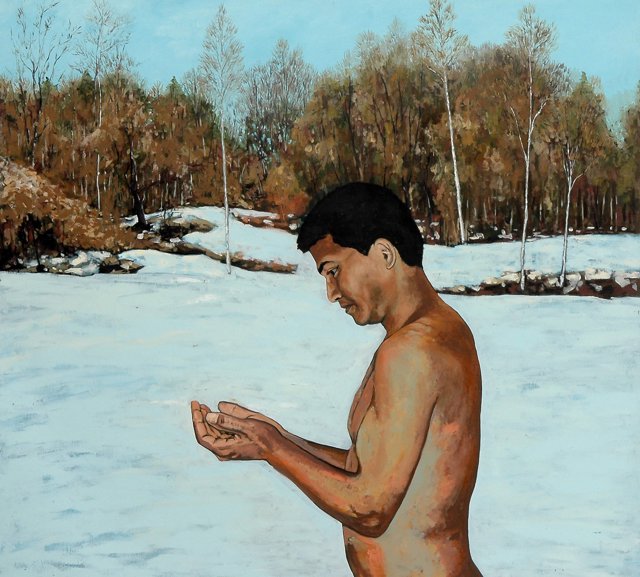
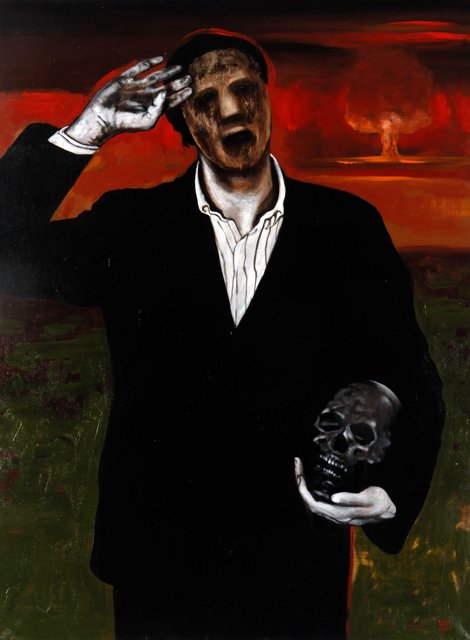
Ahmad Fuad Osman’s early works were defined by experimentation. He adopted the tools of abstraction after graduation and his earliest work in this collection, Midnight Song Mulu (1993), is evidence of this inclination. The work, also embedded within expressionist grounds, features a colourful abstract shapes that loosely refer to tribal art and the vibrancy of East Malaysia’s landscape. It’s also the product of a trip in the nineties that the artist took with fellow Matahati members. Matahati, an art collective of five artists that met at university, remains Malaysia’s longest surviving art collective and during their burgeoning years, parallels are obvious in their works; the use of abstraction can also be seen in the early phases of Hamir Soib’s and Masnoor Ramli Mahmud’s work, and, the theme of isolation and self-identity spreads across the early works of the entire collective. Indeed, four of the five members lived and worked together after university (only Ahmad Shukri Mohamed lived apart, as he was assisting the artist, Fauzan Omar). Ahmad Fuad’s Lost series from 1994 marked a new beginning. The artist realised that abstraction lacked recognisable elements, posed a weighty challenge to audiences, and distanced them from the intended message in his paintings. In Lost III [1994] and Lost Series #5 – Identity Crisis [1994] , we see a clearer representation of figures, but it is in works from the following year – Nightmare and Silent Sorrow (both 1995) that we see a distinct move towards more narrative and literal compositions. Both works touch on the subject of the human condition and also exemplify project more sophisticated and less self-referential themes. They are also the artist’s reactions to the grandiose plans laid out during the heady era of Malaysia’s fourth Prime Minister, Tun Dr Mahathir Mohamad; despite the promises of economic and social development, the artist observed that many social problems remained unresolved and obscured by the gleam of skyscrapers. If the nineties were a transitory period for Ahmad Fuad and the trajectory of ‘otherness’ and ‘isolation’ was in place, these elements were only exaggerated a decade later through the multiple residency programs that he participated in abroad and at home. His first exchange was with the Freeman Foundation in Vermont (2004) and the paintings he produced during this residency touch on the subject of identity and foreignness. In Another Hope (2004), a nude male figure stands solitarily against a bleak, snowy-white landscape. It contrasts greatly with the artist’s own and there is an innocence in the portrayal of the subject who has a quiet but quizzical gaze at his own body and nudeness. Technically, there’s also a heightened sense of realism in this body of work. This achievement is extended further during the artist’s next sojourn abroad in Goyang, South Korea (2005-06), where the treatment of the figures lean towards photorealism. The two works from the artist’s Fatamorgana series in this collection illustrate this change; there is a shiny plasticity to the figures that recall mannequins that, coupled with fashion magazines poses, highlight the superficiality the artist observed in his temporary environment. Ahmad Fuad’s last residency was in his own country at Rimbun Dahan, Kuang (2007-08), where he produced the notable series Recollections of Long Lost Memories. It delves into local history and Ahmad Fuad’s thesis is that ‘history if false memory’. Digitally manipulating a present-day figure onto archival photographs, the artist reminds us that retrospection is selective and accuracy is precarious, and, the first painting of this series offers an emphatic endorsement of this proposition: the satirical element present in the coloured figure facing Malaysia’s first Prime Minister and his mocking expression and pose alludes to how little we truly know about history and choose to discover.

28 Artworks
About The Journey
Amok
Another Hope
Awan Merah Dalam Kenangan Palsu
Ahmad Shukri Mohamed

Ahmad Shukri Mohamed

1969

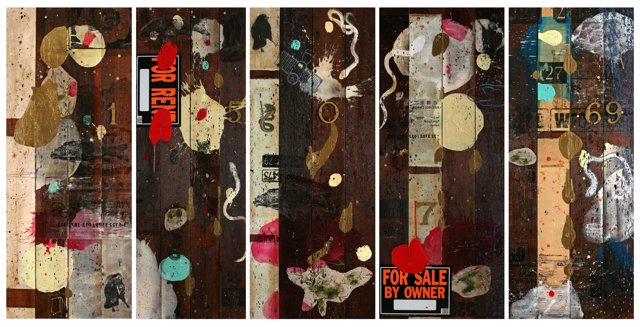
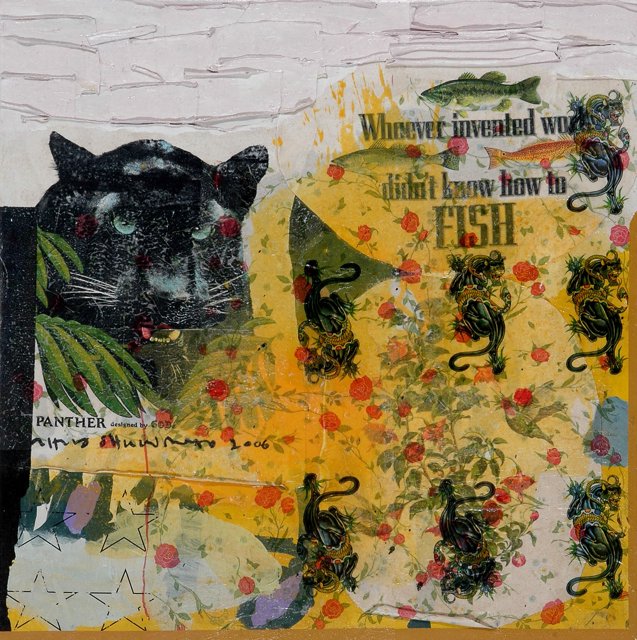
In Ahmad Shukri Mohamed’s works, there is a departure from the immaculacy of painting on canvas towards texture, three-dimensionality, and mixed media. His early works, for instance, do not possess the expressionist angst of his Matahati peers, but heightened explorations of material and form. This can be seen in the artist’s Hope, Dishonest series (1988-90), final year works at UiTM. The series speaks of societal hierarchies and, as they are the earliest indications of the artist’s signatory style, offers a good point for contrast and examination. These collage works feature blends of pastel, acrylic paint, pencil, and stickers. In a work from 1990, images of children are included (recalling the paintings of war-stricken children that Bayu Utomo Radjikin produced during this period) to intensify the underlying message of social inequalities. Marks done in a playful and unpolished way to resemble children’s’ scribbles, emphasize this theme. . The incorporation of grid and demarcations also foretell Ahmad Shukri’s works to follow - the artist’s seminal cabinets and Camouflage II (1994) are examples. The latter - from the artist’s Target series - comments on the exploitation of nature through silkscreen and a combination of material (chiefly the butterflies and other insects mounted in plastic frames). The wood in this artwork is specific to the type used in shipping boxes (demonstrating the contextual sensitivity Ahmad Shukri has for his materials). The theme is repeated in Tribute to Butterflies I (1998), which features a layering of cut-out canvas in the shape of the transitory creatures. Unlike his Matahati peers who worked closely with local theatre group Centrestage, Ahmad Shukri spent the formative years as an assistant to Fauzan Omar. The senior artist, one of the principal exponents of mixed media and materialism in the 1990s, left an indelible impression on Ahmad Shukri. The experience informed the young artist’s methodology of deconstructing the canvas or surface, and influenced him, since the late 1980s, to adopt collage as his preferred method. Another key feature in Ahmad Shukri’s work is the artist’s choice of popular imagery and recognizable motifs. Commonplace icons and motifs – butterflies, fish, batik, chess pieces, or the typefaces and brand logos in the Fitting Room (2005) and Kedai Hiburan (2006) series respectively – allow him to connect with his audiences, explains Ahmad Shukri. The term, ``international style’’, has been applied to his artworks; they have a universality and accessibility that is far-reaching. Social messages pulsate under the glossy varnish of his works. The ills of modern entertainment, for one, is tackled in the aforementioned Kedai Hiburan series. His Fitting Room series essays the artist’s disdain for instant celebrity (it is as easy as trying on new clothes, he says) and rise of reality TV shows. Indeed, Ahmad Shukri’s general criticism of superficial ways in urban areas can be traced to his childhood in Kota Bahru, Kelantan. In the Boy & Girl series (2001), for example, Ahmad Shukri uses signage to depict the polarities between kampung and city life. In urban areas, he notes, people communicate via signs (that have the capacity to lie). Rural folk are more dependent on human communication. In the artist’s seminal Tapir Crossing series, produced in conjunction with the inauguration of the patisatustudio (shared with his wife and fellow artist, Umibaizurah Mahir), the artist laments man’s interference with nature, highlighted by the death of a tapir. In Bersatu Teguh Bercerai Roboh (2002), on the other hand, Ahmad Shukri uses a popular proverb (“united we stand, divided we fall”) to comment on the Kampung Medan incident of March 2001, an intercommunal clash after a misunderstanding over a wedding and a funeral. To the artist, the matter was blown out of proportion. His aptly large canvas lists names (taken from the telephone directory), layered upon each other, to form the basis of the work. The cutaway circles reveal hidden patterns, or a clandestine layer. Without each other (the top and bottom layers), the work would be incomplete, and the background for the bunga raya, Malaysia’s national flower, barren. Personal experiences have also found their way into Ahmad Shukri’s artworks. Timer Bomb (2007) is highly poignant, as it deals with the brief yet upsetting illness of his eldest son, Adam; actual Electrocardiogram (ECG / EKG) prints are visible, alongside text from Adam’s medications, ocean waves that denote tumultuous times and the great tsunami that struck in December 2004 tragedy. Tragedy is a silent and stealthy enemy. There is a more uplifting theme in a likely companion piece, Adam vs. Astro-naut (2007). It depicts Adam smiling, juxtaposed with the floating figure of an astronaut amidst planets and dark space – a composition that pays homage to senior Malaysian artist Ibrahim Hussein’s painting, My Father and the Astronaut (1969). Ahmad Shukri’s most recent works are less cluttered with images, revealing more exposed background and splotches or drips of paint.

45 Artworks
1
10
11
14
Bayu Utomo Radjikin

Bayu Utomo Radjikin

1969

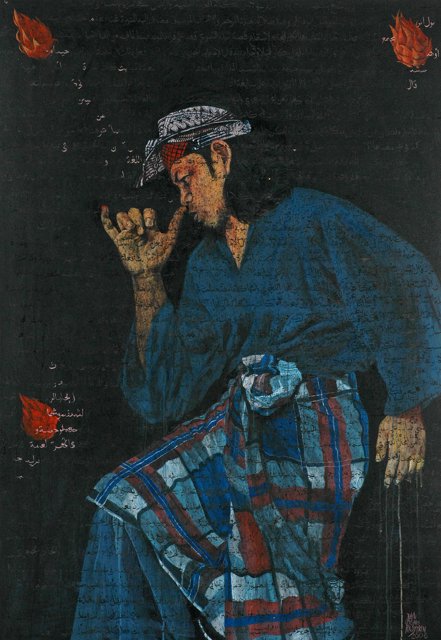
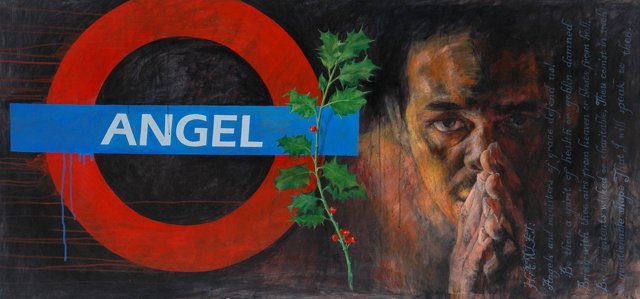
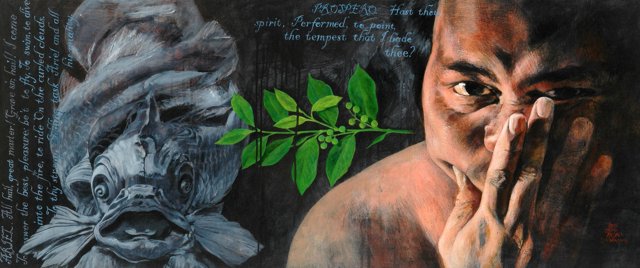
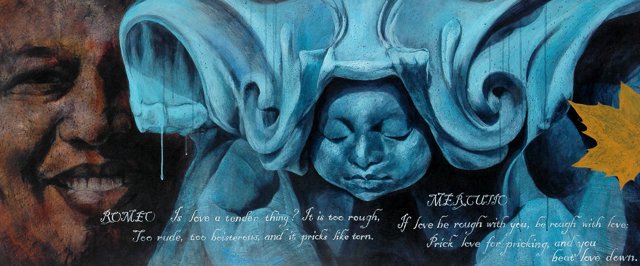
Like his compatriots in the Matahati art collective – formed during the five artists’ student days at UiTM, Shah Alam – Bayu Utomo Radjikin’s earliest works carry nuances of expressionist angst. His now infamous final year student works (results of the collective’s travels to East Malaysia) - metal sculptures of a Dayak chieftain’s upper body titled Lang Ngindang and Lang Kachang (both 1991) - are primal, evocative, and seem to raucously announce the artist’s entry into the Malaysian art world. The theatricality of the early works is pronounced, setting the scene for the artist’s next endeavour - working with the Centrestage theatre group and as an artistic and costume director for theatre. Bayu sets himself apart as an artist practising figurative realism (note the artist’s skill and dexterity in charcoal studies, such as Male Torso or the Skin & Bone Series of 2002). His earliest figurative paintings were social responses to war and suffering. In these works of the 1990s, Bayu portrays figures – many of them children - in solitude, poverty, and abjectness. He also tackled local issues. His portrayal of babies, for example, was his response to the rise of media coverage on child abuse. Bayu’s focus on war is concluded with War Box (1994). The huge wooden installation invites viewers inside to contemplate the series of stencilled words that make up the inside walls. The artistic thrust of the east Malaysian (of Javanese descent) is geared towards the search for core identity. He was nudged towards figurative art, Bayu asserts, by prevailing circumstances at UiTM. The focus had shifted towards Islamic art and there was a lack of educators in other fields. The situation fortuitously enabled Bayu to explore figurative works, without the pressure of dogmatic rules or restrictions. He has done so through series of paintings, such as Mencari Pahlawan (Looking for the Warrior) (2000-Present) and Mind The Gap: From K.L. to London… (2003-2005). The topics of masculinity, self and national identity are dominant. Consider paintings that portray a Malay man in a bandanna folded in the fashion of traditional Malay headgear. Bayu’s sitter – fellow Matahati member, Masnoor Ramli Mahmud - performs as a warrior, cloaked in costume that denotes a variety of arguments (pride, nationalism, manliness); and yet, it is merely a disguise, ersatz, and a falsely constructed identity. This marks the artist’s deconstructive side and, in the artist’s search for his inner identity, an indirect attempt at demystifying national projections of individuals or groups. Interestingly, this series (Mencari Pahlawan) begins and ends with the polar paintings of In Between (2005) and 3 Penjuru (2006). In the former, the artist’s wife poses in traditional Malay male costume, thereby thwarting gender-assigned roles. In the latter, the artist portrays himself in similar getup, though poised to strike – the script in Jawi (the Arabic script dominantly used in Malaysia) does not allude to anything; it is a further reference to false appearances, costume, and how facile it is to fabricate any form of identity. In short, by employing these elements, the artist asks, “Is the warrior merely a result of what he wears?”. In his next prominent series, Bayu brings matters of local identity to a global context. This step follows the artist’s two-year stint in London, where he produced a body of self-portraits - mainly in panoramic format - against elements of landmarks around London and elsewhere in Europe; the gallery’s ionic columns are seen in Monologue @ Tate Britain (2005) and London’s Underground sign is seen in Angel (2005), for example.

27 Artworks
3 Penjuru
Angel
Conversation By The River Thames
Conversation @ Piccadilly Circus